
We are at an interesting crossroad in Bengali cinema. Over the past two decades, it has witnessed significant shifts — some encouraging, others disheartening. But what concerns me is how we’ve lost touch with certain segments of our audience, even though efforts have been made — and continue to be made — to bring them back.
Let’s go back to the mid-2000s, which is when these shifts began. Between 2006 and 2012, we saw a resurgence of Bengali cinema, in a way, led by Rituparno Ghosh. It continued with filmmakers like Anjan Dutt, Srijit Mukherji, and Kaushik Ganguly, who brought fresh stories and a new sensibility to our cinema. It was exciting: it was urban, intellectual, and sophisticated. We won back the urban, middle-class Bengali audience, who had distanced themselves from our cinema, disillusioned by the potboilers of the previous decade.

But, in our pursuit of this “high art”, we fell into our own trap. We became so focused on catering to this demographic that we alienated the rural audience — the backbone of mainstream Bengali cinema. The films of the 1990s and early 2000s, though often melodramatic and broad-stroked, were rooted in Bengali culture, folklore, and rural realities. They spoke to the masses in the districts and small towns. By the time we realised our misgivings, it was too late. Between 2006 and 2014 or ’15, the rural audience had moved on to watching South Indian films dubbed in Hindi, broadcast widely on satellite channels.
Mainstream Bengali cinema, as we knew it, began to die a slow death. By 2015, it had lost most of its relevance. What replaced it were Bengali remakes of South Indian blockbusters. Initially, they worked. But once the audience realised they could watch the originals dubbed in Hindi, they lost interest. These remakes lacked the cultural authenticity of earlier Bengali mainstream films and couldn’t build a loyal audience base. Consequently, the industry found itself in a precarious position — urban-centric narratives couldn’t draw in the numbers, and the rural audience no longer cared.
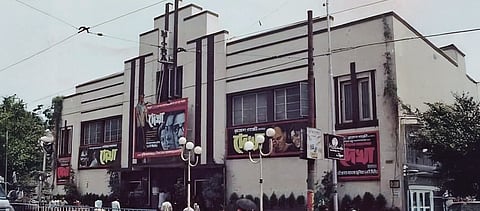
What’s even more dispiriting is the decline of single-screen theatres across Bengal in the last decade. They were once the lifeblood of Bengali cinema, especially in smaller towns. Many of them were shut down, replaced by shopping malls or left to decay. I remember visiting Mitra Cinema in Kolkata for hall visits after my film releases. It was grand, vibrant, and full of history. The gentleman who owned it, Dipenda (Dipendra Krishna), was a quintessential Bengali man with his dhoti, a stick with a golden rim, and love for football, tennis, and cinema. Today, Mitra Cinema is a shopping mall, without even one screen.
Some companies have taken steps to convert single screens into multiplexes while retaining their original names — SVF Cinemas has done a commendable job in this regard. But these are isolated efforts. A comprehensive film policy by the administration is sorely needed, which will incentivise the maintenance of theatres and encourage new infrastructure, especially in rural areas, so people don’t have to travel 30 kilometres to watch a movie.
But then again, nostalgia runs deep in the veins of every Bengali, and I am no exception. I often find myself caught between two worlds — being a poster boy of urban cinema, which played a significant role in reviving the industry, while also understanding the need to reconnect with the masses. The truth is cinema needs both worlds to thrive. Without mainstream commercial films drawing in large numbers, the economics of filmmaking become unsustainable. You need six big-budget films to succeed so you can afford to make the experimental ones.
The potential for Bengali cinema is enormous. When a Bollywood film like Pathaan or Jawan releases, the box office collections from West Bengal alone exceed ₹30 crore. If a Bengali film crosses ₹2 crore to ₹3 crore, we’re ecstatic. This disparity highlights how much room there is to grow. With the right content and infrastructure, we could easily aim for collections of ₹15 crore to ₹20 crore.
However, it’s commendable that despite aggressive encroachment from both Bollywood and South Indian films, Bengali cinema has managed to survive. That in itself is a tremendous feat. I have travelled throughout the country and have witnessed how protectionism works. They try to protect their distribution system by not only closely monitoring the number of films allowed to be screened from other parts of the country and the world but also prioritising the screening of local films. However, in Bengal, there is no such policy.
In Maharashtra, there is apparently a rule that a certain number of shows must be given to Marathi films when they release. We don’t have such rules in our state. Consequently, Bengali films are often stampeded upon and crumpled under the weight of big-budget Bollywood releases. A Bengali film might be running steadily, and suddenly, a Bollywood biggie releases, cutting the number of shows for the Bengali film by half. Exhibitors argue that not all shows of the Bengali film were performing well, so they’ve reduced it. But which Hindi film performs equally well in all shows? None.
The truth is, Mumbai distributors often dictate terms; a single-screen theatre must play all four shows of their film, or they won’t supply it at all. But despite such belligerence in the distribution circuit, Bengali cinema has managed to hold its ground.
Having said that, it’s unfair to compare Bengali cinema with Hindi or South Indian cinema. There’s a cultural difference. In the South, idolising film stars has been a tradition for decades. Temples have been built in their names, and the level of worship they receive is astounding. I recall being in Bengaluru in 2008 when a Kannada superstar passed away. The city came to a standstill; there were strikes, and you couldn’t find a single rickshaw. That kind of fervour gives producers the confidence to invest in larger-than-life spectacles.
In contrast, even at the peak of their careers, stars like Uttam Kumar and Prosenjit Chatterjee, who enjoyed unfathomable fandom, didn’t see their stardom translate into the mass hysteria that one sees in the South.
Bengali cinema’s pull has been nuanced storytelling. Our narratives are rooted in family dynamics, relationships, and a rich folkloric tradition. Even our religious texts have been adapted into songs and ballads, making us a ballad-speaking culture. That’s why I feel our closest model should be Malayalam cinema. The cultures of Bengal and Kerala share several similarities as well — be it in terms of syncretic traditions, or our history with a certain kind of politics. They make films that are closer to reality, deeply rooted in their cultural ethos, yet commercially successful. Stars like Mohanlal and Mammootty are revered, but not deified, allowing space for both mainstream and parallel cinema to coexist.
Interestingly, while Bengali films struggle to find a large audience, Bengali OTT platforms like HoiChoi have managed to shift the needle. They were among the first regional platforms to emerge and have done reasonably well. HoiChoi has become a go-to platform for Bengalis living abroad — in the UK, the US, and the Middle East.
But even here, we face challenges. National OTT platforms don’t pick up Bengali films the way they do Malayalam ones because our movies don’t perform as well in theatres. This creates a vicious cycle — poor box-office performance leads to fewer acquisitions by OTT platforms, which, in turn, reduces visibility and revenue.
Despite the odds, our industry remains incredibly resourceful. In Kolkata, we’ve had to master the art of doing more with less. Budgets are often tighter, and schedules shorter. Yet, the quality of work that our technicians and artistes produce is commendable. I’ve had industry professionals from Mumbai express disbelief when I tell them that we complete a film in 16 to 18 days — something that would typically take 30 to 40 days in Mumbai. However, this also means we sometimes rush through things that deserve more care and attention.
That being said, things are slowly changing. Films like Bohurupi, Shontaan and Khadaan are doing well, drawing audiences from both urban and rural areas. It’s a promising start, but we need more such successes. As someone who wears multiple hats of actor, director, and producer, I understand the importance of a balanced approach. We need to make films for the widest possible audience. Only then can we create a sustainable model where both commercial and experimental cinema can thrive.
Working in both Hindi and Bengali cinema has given me a unique perspective. In Mumbai, there’s a palpable hunger to succeed. People come from all over the country, driven by insecurity and ambition. This creates a proactive work culture. In contrast, Kolkata, being a city of original dwellers, has a sense of entitlement. Many technicians and artistes belong to families that have been part of the industry for generations. While this heritage is valuable, it sometimes breeds complacency and resistance to change.
But I remain hopeful. It’s heartening to see younger writers collaborating with established filmmakers, bringing fresh perspectives. And while we are at it, we may also want to consider script defences — like a thesis defence — where writers justify their choices, leading to more robust storytelling. (This is the foreign-film-school-trained person in me talking.)
There’s just so much more to explore in Bengali cinema. Genres like horror, or even stories people have been reading, for instance, have remained largely untapped. Last year, I pitched a horror series for HoiChoi, and despite initial scepticism, it did exceptionally well — and this was based on a popular published story.
To put it simply, as a people, we need to stop resting on our past laurels. We can’t afford complacency. Right now, the future of Bengali cinema lies in reaching out to the lowest common denominator, tapping into regional narratives, and most importantly, keeping an ear to the ground.
As told to: Arshia Dhar
To read more exclusive stories from The Hollywood Reporter India's February 2025 print issue, pick up a copy of the magazine from your nearest book store or newspaper stand
To buy the digital issue of the magazine, please click here.