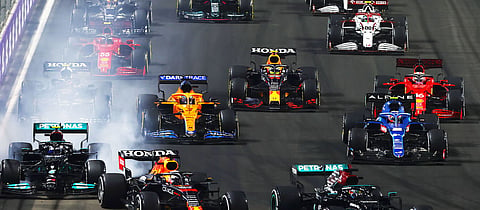


I used to be an ardent Formula One (F1) follower. I’d survived multiple phases of thrilling rivalries and dull dominance: the Schumacher vs McLaren vs Williams years, the Ferrari downfall, the Renault uprising, the Mercedes disruption, the Red Bull juggernaut, the return of McLaren. But then Netflix changed everything. When the first season of Formula 1: Drive to Survive premiered in March 2019, I stopped watching most races. I kept an eye on the results. But even this vague awareness ended by seasons three and four of the docu-series.
This may sound like F1: Drive to Survive drove a fan away from his beloved sport. But the truth is laced with irony. The docu-series was — and continues to be — so addictive that I actively avoided following the live racing seasons so that I could enjoy the streaming seasons. It’s a bit like avoiding spoilers of your favourite show. It amplifies the stakes of every “non-fiction” viewing experience. In other words, the drama of Drive to Survive is so well-crafted that it’s become the nucleus around which the rest of the sport exists. In my case, the quality of filmmaking has inadvertently worked against the primary purpose of the series. But I also know that I’m the peculiar exception, not the norm. I chose storytelling over life, and not for the first time.
The fact is that Drive to Survive has single-handedly revived the dwindling global popularity of motor racing. Not just that, it’s gotten the social media generation — and newer demographics — into the notoriously inaccessible sport. It’s a rare democratisation of fandom: an intersection of mainstream cinema and arthouse sport. Almost everyone with a streaming subscription — men, women, children — tweets like pros about the championship. Such cult-making is usually reserved for mountain-climbing and football-club documentaries. It’s also turned every stakeholder — drivers, technicians, team bosses (who can forget Haas F1’s Guenther Steiner?), partners — into household names. At some level, perhaps the possessive purist in me is a bit salty that the exclusivity of F1 is no more; it now belongs to everyone. Season 7 of Drive to Survive just dropped, the 2025–26 championship has begun, but I’m busy muting words like “Verstappen”, “Hamilton” and “Norris” on X.
Netflix can be blamed for frying true-crime non-fiction into binge-watching snacks, but their sports docu-series algorithm is a success story. F1: Drive to Survive was only the beginning. The streamer has gone on to humanise other similarly niche playing fields. Full Swing does a terrific job of capturing the essence and colour of professional golf; the game looks anything but slow through the lens of diverse narratives. Tour De France: Unchained is the most thrilling of the lot; it compresses the brutal physicality and endurance of the world’s toughest cycle race into a series of skilfully filmed stories. In such cases, the roles of following were reversed. I became the rookie fan that golf and cycling purists resent, accessing a complex sport through the keyhole of filmmaking.
Break Point and Sprint don’t scale the same heights with tennis and sprinting, but they familiarise us with the isolated athletes whose identities were previously limited to their achievements. The downside is that some of these shows conveniently omit controversial storylines (like the domestic abuse allegations against tennis star Alexander Zverev) or distort timelines in pursuit of narrative rhythm over social expression. But it’s a small cross to bear in a genre that could’ve just as easily been a hagiographic slop of grit and greatness. The approach isn’t perfect, but I’m perpetually impressed by the volume of footage the makers sift through to spot patterns and “character” arcs.
Cricket is not as global, so it’s no surprise that there’s no extensive, behind-the-scenes docu-series on the circuit yet. It’s also likely that a streamer faces access restrictions, red tape and PR mandates for a sport that’s controlled by the culture of a few countries. The middling Cricket Fever: Mumbai Indians (2019) only lasted one season. At best, you get poignant personality documentaries like Ben Stokes: Phoenix from the Ashes (2022). Amazon Prime Video’s The Test — a docu-series following the Australian Men’s Test Cricket team — is the closest the sport has come to replicating the template. Perhaps it’s just as well. If some great cricket-coded non-fiction does emerge in the OTT space, the prospect of detaching from the live sport is implausible. Imagine insulating yourself from the bated breaths, wild screams and countrywide tremors, like when Suryakumar Yadav plucked a ball out of the sky thousands of miles away on 29 June 2024.