

One hundred and forty-four. That’s the number of times a Hindi film actor portrayed the same role throughout his career. Jagdish Raj Khurana, known for films like C.I.D. (1956) and Bobby (1973), holds a Guinness World Record for being the most typecast actor, having played a police inspector in 144 films.
Another actor came close. Iftekhar, who began as the honest police officer in Shree 420 (1955) and went on to reprise the same role in iconic films like Don (1978) and Sholay (1975) — for a total of 75 times.
There’s no dearth of actors being offered a different variant of the same role. Once an actor does something well, the industry forces them to keep doing it. If the audiences laud an actor’s work in one role, producers, driven by the bottom line, will keep offering those actors similar roles because they ‘work’.
But there is a disruptor shaking up the market, breaking typecasts, reimagining actors in diverse roles, and championing fresh talent free from nepotism and bias.
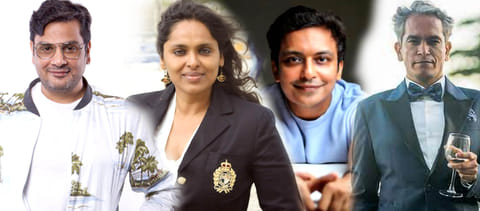
“When I began, casting directors weren’t taken seriously by most filmmakers,” says casting director Mukesh Chhabra. "Only visionaries like Anurag Kashyap and Vishal Bhardwaj, who knew us from Delhi theatre days, recognised our contributions. Back then, directors weren’t accustomed to involving us in the creative process. Now, the landscape has changed entirely.”
Casting directors are crafting careers, shaping stories, and sometimes, pulling off what can only be described as casting coups that redefine the game. It’s a far cry from the shadowy term (couch) that has haunted the narrative around the profession for far too long.
A casting coup is when a single decision reshapes the destiny of a film and elevates it into something unforgettable. In 2024, Romil Modi orchestrated not one, but two such coups, with Laapataa Ladies and All We Imagine as Light.
The former introduced debutants Pratibha Ranta, Nitanshi Goel, and Sparsh Shrivastava, whose raw performances lit up the screen. In stark contrast, Modi brought together the achingly formidable cast of All We Imagine as Light that leaned into the gritty realities of Mumbai, with Kani Kusruti and Divya Prabha embodying the city’s resilience and despair in equal measure.
Then, there was Chhaya Kadam, a well-known name in Marathi cinema, who brought three strikingly different performances this year with Laapataa Ladies, All We Imagine as Light, and Madgaon Express (cast by Ravi Ahuja) cementing her status as one of the year’s breakout stars.
“Casting isn’t just about matching talent to roles; it’s about creating the foundation for a film. If the casting is right, 80 per cent of the film’s work is done,” says Modi explaining why the films he works on tend to resonate so deeply with audiences. “The audience gets immersed in the performances, and everything else becomes secondary.”
Some of this year’s standout performances have been unexpected picks: starting with Vijay Sethupathi and Katrina Kaif in Merry Christmas (cast by Pooja Ladha Surti) and ending the year with the discovery of Preeti Panigrahi in Girls Will Be Girls (cast by Dilip Shankar). And if these performances are a testament to anything, it is that the right role can unlock an actor’s full potential. This is the essence of a casting coup: It not only elevates the film but also has the power to reinvent careers.
“Today, every filmmaker, whether it’s Anees Bazmee, David Dhawan, or even directors from the ’90s, works with casting directors. They recognise the importance of having fresh perspectives on casting, bringing in new talent, and ensuring the supporting cast is just as compelling as the leads,” says Chhabra.
For decades, Bollywood’s casting landscape has been mired in predictability and nepotism. The industry’s reliance on star power has overshadowed fresh talent, while the process itself has been charged with being opaque and contaminated by “casting couch”.
Opportunities for outsiders were scarce, and creativity suffered as a result.
“It’s not about existing names; it’s about being surprised by new talent,” says Tess Joseph, who works between industries on projects like The White Tiger (2021) and Lion (2016). “That’s one of the great advantages of working on international and independent projects. What we typically do is invite as many people as possible to showcase their interpretation of the role.” The tide is turning. Casting directors have reshaped the industry’s approach, prioritising art over the status quo. “For producers, it’s about business; for us, it’s all about the art,” says Chhabra.
The rise of self-tapes and remote auditions started during the pandemic and has since democratised access, enabling actors from across the country to showcase their talent without geographic or logistical barriers. “With India’s diverse talent pool, we’re casting actors from all across the country — Kashmir, Chennai, Vishakhapatnam, Manali, Chandigarh — and even internationally,” says Paragg Mehta (Gadar 2, The Shameless, Vicky Vidya Ka Woh Wala Video). Even though most filmmaking decisions stem from a business point of view, casting directors have often pushed back on certain choices that have paid off.
Ali Fazal summed it up at a recent THR India roundtable: “Casting directors are changing the game.”
Many incredible films owe their depth to casting directors, who saw beyond the obvious, trusting talent to transcend expectations. “We’re changing the game by finding diamonds in the rough,” says Joseph. “The growth of artists who have no backing is a result of filmmakers trusting casting directors to champion talent. We’re often the first to see potential, and we fight for it.”
While casting for Lipstick Under My Burkha (2016), Mehta recalls pushing for an actor. “During auditions, Vikrant Massey stood out to me almost immediately. Although the director had initial reservations, they quickly saw the potential after the auditions,” says Mehta. Massey has made a place for himself in the industry, with 12th Fail (cast by Mukesh Chhabra and Aayush Saxena) arguably being a career-high for the actor.
“Sometimes, we don’t see the immediate shift, but good casting makes for a permanent memory for the audience, which opens many doors for future projects,” says Mehta.
Casting directors are no longer behind the scenes. They’re at the forefront, fighting for freshness and surprise.
“More credit is due for the intuition that casting directors bring,” says Mehta. Joseph adds, “You see, when casting is done right, it’s nothing short of revolutionary.”