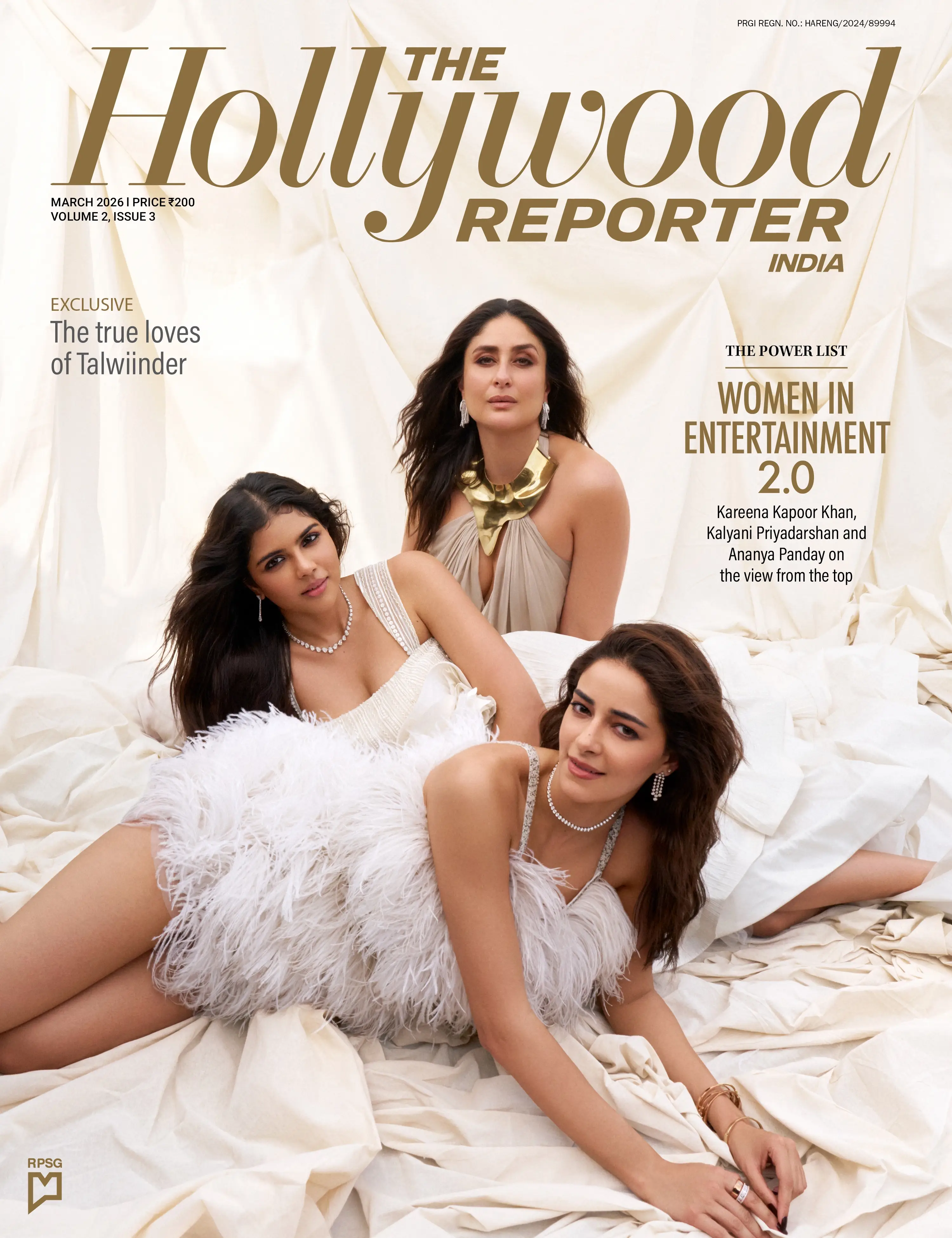
Exclusive | Kareena Kapoor Khan, Ananya Panday and Kalyani Priyadarshan on Defining Boundaries and Learning to Say ‘No’ on Film Sets
The actors reflect on why drawing boundaries on set is no longer a risk, but a responsibility.
This Women’s Month, The Hollywood Reporter India spotlights three actors from different generations — Kareena Kapoor Khan, Kalyani Priyadarshan and Ananya Panday — who reflect on the importance of saying ‘no’, and what it means for women in cinema today.
Kapoor Khan is candid about the culture she entered. “We just did what we were told,” she says. “I’ve seen a transition in that, even though I’ve always been vociferous about the way I’ve felt about things.” The status quo was rarely questioned: yet, she says, she made it a point to prioritise her instincts.
“I told Farah [Khan], listen, I can’t dance like Hrithik Roshan,” she laughs, recalling a moment where she declined a wide-angle shot during a dance sequence, aware that she would not be able to show up the way she wanted to. “If you know what you want, you should always put yourself first,” she emphasises. “You have to look inwards for yourself, and speak up.”
For Panday and Priyadarshan, this lesson was learned as they observed co-actors on-set.
“In my first few films, I didn’t know that I could say no,” says Panday. “I didn’t know that I could say that I’m not comfortable doing something, that I don’t want to wear something on-set, or I’m not okay saying a dialogue,” she shares. “I think sometimes we don’t realise that films are forever.”
There will always be a record of one’s performance on-screen, she says, and that can have a strong impact on audiences, be it positive or negative. "Even the smallest thing you might say, people are going to watch it for years, and people are going to remember it,” she adds.
Panday says she learned the art of saying ‘no’ while working with Deepika Padukone on the sets of Gehraiyaan (2022). “I saw how much strength [Deepika] had, and how she conducted herself, if she wanted something, she would ask for it, and she did it in such a graceful way,” she recalls. “I was scared that if I asked questions, the [response on-set] would be, ‘she’s too much’...but when Deepika [asked questions], that taught me a lot.”
Similarly, Priyadarshan learned that self-sacrifice may not be in the film’s best interest while working with none other than Fahadh Faasil. “We often give everything for a take,” she says. “And we don’t like to say no to our directors.” Yet, she says, she has been “very, very lucky” with the filmmakers she has worked with, who have always prioritised her comfort on-set.
“There are moments where you’re incredibly exhausted, and you give a shot, but you watch the movie and realize your eyes look [visibly tired],” she shares. She recalls a moment when filming with Faasil that taught her that ‘no’ is an option. Despite the natural lighting affecting their performance, she gave her take — however, Faasil politely declined.
Priyadarshan shares, “The light was in his eye, and he said, ‘The light is in my eye, it’s going to look bad on the big screen.’” He took a break, returned once the lighting improved, and completed his shot in one take. Since then, she says, “I’ve learned to say, it’s probably better for the film if I take a break.”
What is clear from their perspectives, is that ‘no’ is no longer a form of defiance: if anything, it’s discernment and self-awareness. In a culture where compliance is expected of women, the three actors have been rewriting the rules of professionalism on-set.