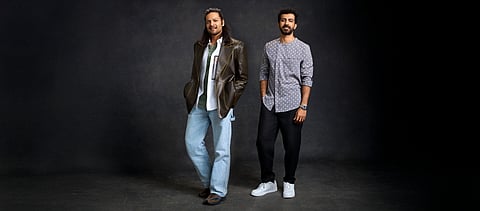


During a recent roundtable for streaming actors hosted by The Hollywood Reporter India, actors Roshan Mathew and Ali Fazal discussed the ripple effects of the Hema Committee Report on the Malayalam film industry and beyond. The report has sparked many opinions, revealing the disturbing realities it has uncovered, but also offering a sense of hope for change.
Mathew, offering his subjective perspective, emphasised that, as a man in the industry, he could not speak for the experiences of women on set. However, he highlighted the positive changes brought about by the Hema Committee Report. “I'm in no position to tell you objectively that this is the right takeaway," he said. "All I can give you is my subjective opinion. There's already so much noise around it, so many opinions, that everything’s being diluted. But the absolute core of the issue right now is that conditions on set are beginning to improve. There are people who are now wary. There are people who will now think twice before saying or doing something that they would otherwise so freely have. Some sets are at least putting active thought into, okay, we have these many women on set today, so we need to have a washroom facility for them. At the absolute bare minimum, it’s being thought about.”
However, Mathew also noted some negative consequences of these changes. “At the same time, I've spoken to people who said, 'Let's move away from employing a lot of female crew members because, you know, the Hema Committee and everything. It’s just too stressful.' There’s all of this happening. I think to stay sane and positive, it’s important to focus on the good things coming out of it. For these basic, essential changes to happen… all of this needed to happen. Yes, we’re paying a price for it. Yes, this movement is great, but there are genuine issues being brought up. At the same time, some people may be wrongly accused, and others may vilify the movement, which causes a credibility issue. Some people just want gossip; they’re desperate to find out who started it all.”
Mathew concluded that, despite the challenges, one has to decide what they truly want to take away from the situation: “At the end of the day, it’s like when you go onto YouTube and see all of these videos in a particular category — you have to decide which one to click on. Then the algorithm pushes you more in that direction. So, you’ve just got to focus on what you want to see out of it. If you think it’s worth it, then align yourself with it, put your energy into it, and see how you can make a difference. If not, do what you think is most correct.”
How naive is it to hope for a similar report in the Hindi film industry?
Fazal spoke about the systemic changes that are necessary for improving working conditions for women, especially in the technician world. “We don’t have good union systems,” he said. “Not to diss our existing ones, but I think the trickle-down effect is real. And this is not just about this conversation; it's about diving into the world of technicians and those behind the scenes. There's no security there — no rules, nothing.”
Fazal continued, stressing the need for systemic change from those in power: “When we were shooting Girls Will Be Girls, it was an all-female crew, and we were very proud of it. But at one point, we realised there were no female gaffers in the industry. There’s one in India, but we decided to start a program. We got it approved by the Berlin Film Festival, Berlinale. The girls we trained are now working in the industry. Why I’m connecting this to the report is that there’s a need to embed small seeds of change in the system. I think it’s possible; anything is possible if there’s a will. It doesn’t have to be a big hurdle. We can try to change things.”
Aditi Rao Hydari, who was also present at the roundtable, summed up the sentiment: “We live in hope.”