

How do you locate Sriram Raghavan in his deliciously twisted films, populated by morally wayward characters, shadowy pasts, and lives circling prison bars? The director has a disarmingly simple answer: cats. “I love them, so they are always there in my films,” he says. But in his latest, Ikkis, the most revealing trace of Raghavan may not be a visual motif at all. It lies in the film’s politics.
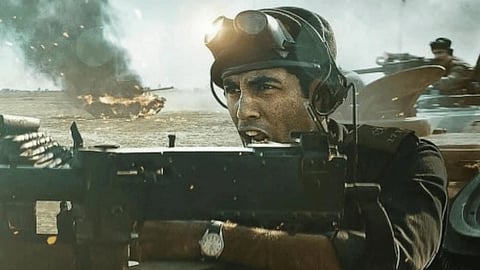
Based on the life of Arun Khetarpal, the youngest recipient of the Param Vir Chakra award, Ikkis centered around the Battle of Basantar during the 1971 India–Pakistan War. The film drew praise for its empathy and its idea of patriotism anchored in people, institutions and memory instead of loud, muscular nationalism.
During a special 'Vartalaap' session organised by the Screenwriters Association (SWA), Sriram Raghavan was in conversation with filmmaker Satyanshu Singh when he was asked whether Ikkis — headlined by Agastya Nanda and featuring Dharmendra in his final screen outing — had faced any resistance from the industry.
“We were quite baffled, actually, by the response after the film came out,” Raghavan said in his quintessentially cool manner during the session, which was attended by filmmakers Charudutt Acharya, Hitesh Kewalya Anu Singh and lyricist Raj Shekhar, among others.
"All these scripts go through the army for vetting as they have to agree to it. That was four or five years back. After that, we had them on the set with us as well. The reaction of the armed forces when they saw the film was very good. Our first screening was for an audience of 800 plus people in Delhi, which was entirely army, top brass, veterans and young cadets. It was a solid screening, which was also our main, first big screening with outsiders."
When Singh asked whether he had ever sensed, during the making of Ikkis, that a section might react differently to the film, Raghavan recalled posing a similar question to producer Dinesh Vijan five years ago. “He said, ‘No—why are you saying that?’ I told him I didn’t feel it either. But he broke it down very simply: ‘The boy goes and destroys their tanks, the father goes and forgives. So what?’"
Raghavan added that every artist functions with a degree of self-censorship, choosing what to articulate and what to hold back.
“It becomes a bit crazy if I start censoring myself out of fear, when I feel I want to say something, but I’m scared to. If that happens, I have to find a way to do it. As filmmakers, that’s what we must do. Even in this case, I feel many of those who are objecting probably haven’t seen the film. Now that it’s out, I hope they watch it—then I will respond.”