

According to Netflix’s “What We Watched in the Second Half of 2024” report, of the close to 9,000 film titles, the only Indian film to make it to the top 100 most viewed titles globally was Tamil thriller Maharaja starring Vijay Sethupathi, with 25 million views. During the streaming giant’s annual slate launch event in February, Netflix India announced over 20 original shows and films set to release over the next two years. But only two were non-Hindi titles: Tamil original film Test, and Super Subbu, the streamer’s first ever Telugu original series. Maharaja is technically a post-theatrical acquisition, but if that’s the level of viewership commanded by a Tamil film, why haven’t viewers seen more commissioned originals from the South?
In the eight years since it’s been releasing originals in India, Netflix has thus far only put out a handful of originals from the South, made up of a few film titles and several pandemic-time anthologies. This seems to be fairly representative of most leading OTT platforms’ attitudes towards Tamil, Telugu, Malayalam and Kannada cinema thus far. While viewers will routinely find post-theatrical-release acquisitions on the major platforms (Netflix, Amazon Prime Video, SonyLIV, JioStar and ZEE5), in terms of the thriving parallel ecosystem of commissioned series and films, Indian streaming has thus far predominantly been a very Hindi-focused offering.
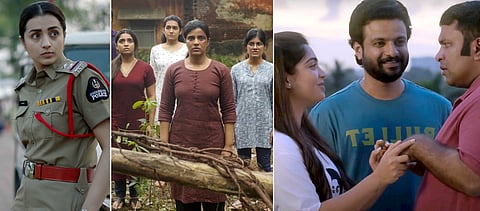
Tamil cinema filmmaker duo Pushkar-Gayatri believe it’s simply a factor of time and the years it takes for any streaming platform to navigate a new industry. The pair are currently leading the charge as the most prolific and reputed series creators from the South, having made two seasons of their acclaimed Tamil crime thriller Suzhal: The Vortex, and serving as producers on Tamil thriller series Vadhandhi: The Fable of Velonie, both for Amazon Prime Video, with a number of other shows in the pipeline.
“All these [platforms] came in and set up shop in Mumbai seven or eight years back…. Now that they’ve got their footing, they’re starting to have smaller teams in Chennai and Hyderabad, and now they’re actually trying to develop a lot of shows, so it’s just taken time,” said Gayatri on The Streaming Show podcast in February.
SonyLIV content head Saugata Mukherjee similarly emphasised the importance of taking it slow and steady when navigating new markets. He tells The Hollywood Reporter India that it’s taken them two years to build their first slate of shows from the South, consisting of Tamil, Telugu and Malayalam titles releasing this year. “It’s not easy. While people might want to say platforms are taking time, it does take time to find the right collaborators…. Sometimes the idea of doing a series can be daunting. It’s like making three or four films together. Once it becomes a process that has been seen and lived by quite a few people, the ecosystem will also mature and more voices will come forward.”
Pushkar echoed the challenge of series projects taking a lot more time to assemble and develop as compared to theatrical features, which can make it a less enticing prospect for some filmmakers. “It takes a year-and-a-half for the writing process. And another year-and-a-half for the show to be made from greenlight to completion. So, it’s a three-year cycle minimum. We started in 2020, so this is only the second round of that cycle.”
During a panel titled the South Saga at the seventh edition of the Indian Screenwriters Conference, held earlier this year in Mumbai, blockbuster filmmaker Vivek Athreya (2024’s Saripodhaa Sanivaaram, 2022’s Ante Sundaraniki) provided a view on Telugu cinema: “OTTs are approaching big filmmakers but nobody wants to sit and write for a show. They’re more interested in having their films release in theatres. Hopefully, we will get there soon.”
The lack of attention towards the South from the big players thus far has opened opportunities for local players to fill the gap. The Hyderabad-based Allu Arjun–backed streaming platform AHA launched in 2020 and was specifically aimed at the Telugu market. Three years ago, it began venturing into Tamil originals. “The thing about AHA as a platform is that we are very connected to the local audience. We have offices in Chennai and Hyderabad,” says senior vice president of content and strategy Kavitha Jaubin.
As per several accounts, Tamil and Telugu are still considered bigger markets and are therefore given the most consideration. Amazon Prime Video has been more prolific than Netflix in commissioning originals from the South over the last five years, but thus far, it has only commissioned Tamil and Telugu titles. Malayalam and Kannada titles, on the other hand, haven’t quite had the same welcome.
“JioHotstar and SonyLIV are the only two platforms that have done shows in Malayalam,” says filmmaker Rahul Riji Nair, who created the first Malayalam series on both platforms with JioHotstar’s Kerala Crime Files and SonyLIV’s workplace comedy Jai Mahendran. Nair tells THR India that despite being home to some of the most exciting screenwriting and storytelling talent in the country, Malayalam cinema isn’t awarded the same level of attention, or resources, as the other industries.
“Platforms come here with this preconceived notion that Malayalam budgets are much lower, and talent will be cheaper. But making a series anywhere is expensive. So if you quote a budget similar to a Tamil, Telugu or Hindi series, they’ll say this is not what we expected.” He adds, “I don’t know the exact viewership numbers of my shows; I’ve been told they have been very well received. But are they doing the numbers that a Hindi show would do? I don’t know. Still, for me, that benchmark is wrong. They have been patient in Hindi and built the OTT market over time and we need the same patience in Malayalam.” Nair feels he has more stories to tell, but for his series ideas that demand a bigger budget, he says he may be forced to consider developing them in Tamil or Telugu.
Ullozhukku writer-director Christo Tomy spoke of similar resistance to the idea of a Malayalam original during the South Saga panel. “I think a few years ago the big players were developing a few shows in Malayalam, but they felt that the viewership would be less, so they wanted to change the language of those shows to Tamil or Telugu,” he said. Tomy is currently developing a show for a major streamer in Hindi.
According to multiple accounts, no industry is as overtly overlooked and immediately disregarded by streamers as Kannada cinema. Forget original films or shows, even acquiring films after their theatrical release, which remains healthy in the other three industries, is a no-go. “It’s like a blanket ban,” said Hemanth Rao — director of highly acclaimed two-part romantic drama Sapta Sagaradaache Ello – Side A and Side B (2023), two of the rare recent Kannada titles to have found a home on a top streamer (Amazon Prime Video) after their theatrical releases — during the South Saga panel. “Kannada cinema is not even considered. They’ve categorically told us they’re not going to pick up Kannada films,” he added.
“It is not right that a language that has produced KGF or Kantara is not getting picked up. I’ve tried multiple times to get films like mine, made by other filmmakers, to streaming services, and I get their perspective but it’s heartbreaking for us that an entire language of cinema is not getting a platform,” Rao tells THR India. He admits that it’s also partly because the industry isn’t currently producing many good films. But even the standout gems are being ignored. Actor, writer, filmmaker and producer Rakshit Shetty is one of the most respected names in Kannada cinema, associated with many of the acclaimed Kannada films of the last few years. His Paramvah Studios recently announced that they were forced to release their self-produced Kannada series Ekam on their own website after it was rejected by every major streamer. Ekam has been met with rave reviews.
But Rao is confident the status quo will change sooner rather than later. “I think it’s definitely going to change because you can’t keep ignoring the impact of a Pushpa or Maharaja or Kantara. These films and filmmakers aren’t just opening doors, they’re ramming doors down. And if platforms continue to go on without taking cognisance of the fact that there’s this huge audience waiting, they’ll only get left behind.”
To read more exclusive stories from The Hollywood Reporter India's March 2025 print issue, pick up a copy of the magazine from your nearest book store or newspaper stand.
To buy the digital issue of the magazine, please click here.