

Recently, singer Taylor Swift took to Instagram after [presidential candidate and former President of the United States of America] Donald Trump posted artificial intelligence (AI)-generated images of her endorsing his campaign on Truth Social, which is an alt-tech social media platform owned by Trump Media & Technology Group. “It really conjured up my fears around AI, and the dangers of spreading misinformation,” Swift wrote.
As a public figure with a massive following, the causes she supports are of significant interest, making the circulation of such deepfakes all the more concerning. In fact, similar AI-generated clips of actors Ranveer Singh and Aamir Khan criticising Indian Prime Minister Narendra Modi went viral during the Indian general elections this year as well.
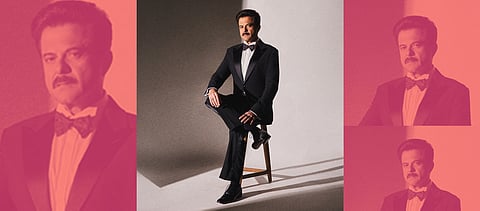
“Everywhere, celebrities face similar challenges,” says actor Anil Kapoor, who recently graced the cover of Time Magazine as a part of their list of The 100 Most Influential People in AI 2024, which was published on September 5, 2024. The list highlights the most influential individuals in the realm of artificial intelligence in a given year across all sectors, featuring industry leaders like Sundar Pichai (CEO of Google and Alphabet) in tech, and actors like Scarlett Johansson in the field of entertainment.
While it celebrates those who are driving innovation in AI, it also includes the ones who have raised important concerns about the safety and security of its users. This comes a year after the actor moved the Delhi High Court seeking protection of his name, image, likeness, persona, voice and other attributes against misuse over the Internet. After several fake images and videos of Kapoor surfaced online, it prompted him to take this measure that secured him a place on the Time Magazine list. “It's crucial to protect personality rights and set a precedent for the industry. The rapid growth of AI, blockchain and NFTs (Non-Fungible Tokens) opens new doors for creators, but also presents new challenges,” he explains. “I realised that if I didn't take action, it could have far-reaching implications for all public figures.”
The misuse of artificial intelligence can, and has often damaged the reputation of celebrities while invading their privacy. But what's more alarming is the ease of access to such technology, enabling anyone to generate defamatory content from any part of the world. “Add to that the fact that regulations in this space are still evolving, and it does make for a precautionary tale,” says Kapoor. He continues, “As public figures, we're always in the spotlight, and a responsibility comes with that. When AI-generated content misrepresents our beliefs or actions, it can cause serious harm to us and our fans who hold us to certain ethical and moral standards.” It is this shared fear that ultimately compelled Swift to publicly endorse Kamala Harris after the US presidential debate between Harris and Trump earlier this month — a political stance the singer may not have openly declared otherwise.
Also, while Kapoor was fighting his case in India in 2023, members of the American labour union of the Screen Actors Guild - American Federation of Television and Radio Artists (SAG-AFTRA) were protesting to demand better work conditions and fair pay, regulation of self-tape auditions, streaming residuals, and calling out the use of AI-generated replicas without authorisation or fair compensation in Hollywood. This is a growing problem that affects all creative fields, says Kapoor. “Actors, musicians, visual artists and filmmakers can see their work being manipulated or replicated without consent,” he says. “The Hollywood [Writers Guild of America] strike highlighted a concern that resonates across industries — that AI can dilute originality and deprive artists of their rights.”
Eventually, after a 118-day-long strike, the American unions struck a deal with producers and studios that emphasised consent, fair compensation and robust regulations for using AI and digital replicas in the American film industry.
For Kapoor, winning the case was just the beginning; he says being included in Time Magazine's list was an incredible honour. “It's humbling to be recognised among influential people worldwide, and it’s a testament to my hard work and dedication,” the actor says. And while technology advances rapidly, bringing with it fresh opportunities, the lack of mandates around the same presents new threats.
“Without taking away from the creative possibilities that AI has created, we need to understand it better and learn to safeguard our rights,” says Kapoor. In his opinion, some ways in which one can do that is by advocating for “clear regulations around AI, stronger legislation addressing unauthorised use of personal attributes, and education to raise awareness.”
However, until these measures are implemented, he urges public figures to be proactive in monitoring the misuse of AI technology and taking legal action. After all, as Swift wrote on Instagram, “The simplest way to combat misinformation is with the truth.”