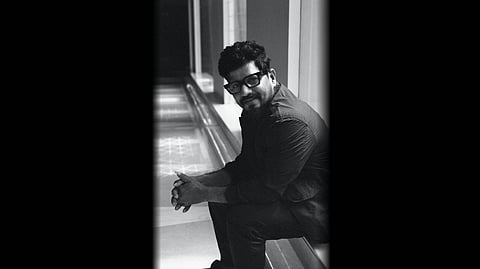


It all started very suddenly. Accidental, even. One day I got a call from Anurag Basu’s brother, Abhishek Basu. He asked me, “Is the cameraman who did Dasavathaaram (2008) the same Ravi Varman?” I said yes. The next thing I know, he connects me to Anurag Basu (dada). “Come and meet tomorrow,” he said.I met dada for just 15 minutes. He gave me the brief, showed me two or three pages of the story like snapshots. Two days later, he called and asked, “How did it feel?” I told him, “Very good. There are a lot of silent moments, and many places where the visual alone will tell the story.” That kind of silent film, where images carry the weight of the narrative, is rare for a cinematographer. After hearing his narration, I was ready to dive in.
We started shooting in Mumbai, then went to Darjeeling, Kolkata, Ooty, and Pollachi. I even recommended matching certain Darjeeling shots with Ooty and Pollachi to create a visual continuity.
Technically, there were always challenges, but dada’s trust made them enjoyable. I had a language barrier — I understood Hindi but couldn’t speak much — and from day one, he reassured me: “Don’t worry, Ravi. Every scene will have rehearsals.” He encouraged me to try new things, not to fall back on regular methods. He gave me complete freedom: “Fly your own idea,” he would say. In his world, if he said, “I’m impressed,” it meant a lot.
Even after the first show, before the official release, I wasn’t happy with two or three VFX shots. Basu dada called the supervisor that night and we changed them immediately. That’s the kind of director he is.
I treated each character differently. Ranbir Kapoor’s Barfi was a fairy-tale figure. He was dreamy, surreal, had the innocence of a child. Ileana D’Cruz’s scenes had grey-blue-lavender tones, a romantic happiness laced with the knowledge it wouldn’t last. When they meet again, browns and golds brought warmth to the sadness. Priyanka Chopra’s world was mature in colour, yet her character remained innocent. I wanted the overall palette to be classic, fill it with colours that never age, that feel timeless, not trendy.
There are two days I’ll never forget. One was when the art team was fixing a pane of glass, and it broke. We decided to keep it, put water on it, and shoot the scene through rain-sprinkled glass. The other was the railway station scene in Darjeeling, where the lovers part. All that sunlight hitting the lens, the flares, the glare — none of it was accidental.
When I was a kid, I didn’t have a home. I used to sleep on benches at a railway station. In the mornings, sunlight would bounce off the windows of passing trains and hit me in the face. It wasn’t gentle. It was sharp, blinding, a reminder that I didn’t belong anywhere. That memory stayed with me. When shooting Barfi!, I wanted the light in that scene to carry the same sting, be something that hurts in a way you can’t explain. I let the light bleed into the lens, flare, disturb the frame. Not polished, not pretty, but honest.
People often ask me about the colours of Kolkata in the film. My experience of the city was always deeply visual. Kolkata has always been textured, painterly. Old colonial buildings, chipped walls, tram lines through narrow streets, green shutters framing windows. Poetry in decay, dignity in dust. In my mind, Kolkata wasn’t one colour: it was ochres, muddy browns, deep greens, faded yellows. That became my emotional palette for Barfi!.
Originally, the script had darker tones, but I kept thinking: what if we celebrated this story instead? What if the pain was wrapped in warmth? I wove those Kolkata colours into costumes, wall textures, reflections off tram windows, even the extras. We pushed it subtly in post-production, the skin tones stayed natural, but the world around them leaned into that memory.
Basu dada never asked me to dial down the flares or glare because he was ready to embrace them. This was one of the first times in Indian cinema where raw, uncontrolled light was allowed to behave like a character. Not just to illuminate, but to interrupt, obscure, reveal. Love, grief, hope — they aren’t tidy. Sometimes they overwhelm, like light bleeding into your vision. Kolkata gave us that freedom. It’s a city that doesn’t pretend. Messy, moody, soulful. We didn’t just shoot it. We absorbed it. And we let it colour every frame.
To read more exclusive stories from The Hollywood Reporter India's September 2025 print issue, pick up a copy of the magazine from your nearest book store or newspaper stand.
To buy the digital issue of the magazine, please click here.