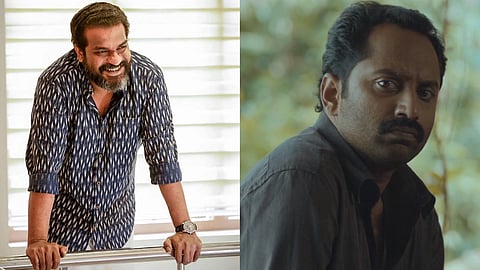


It’s a film that gets credited as for changing the texture of Malayalam cinema, notoriously bringing up the term ‘Prakriti Padam’ (or ‘Nature Film’) in the way that it absorbed reality to a whole new extent, diverging from the formulaic style of mainstream commercial cinema. It’s also a movie that popularised another term that’s become a part of pop culture, each time a director includes easter eggs or secret elements that are not easy to notice on first viewing. The phrase for this is, “Pothettan’s brilliance (Pothan’s Brilliance), in the way that tiny bits of information come together to give the viewer a new experience.”
The film, which released 10 years ago, is regarded as a modern Malayalam classic. Its director went on to make just two more films in this decade, Thondimuthalum Drikshakshiyum and Joji, both starring Fahadh Faasil. It’s also a film that gets credited for the way it revived Fahadh Faasil’s career after a particularly low phase when it came to his commercial films. As it completes the milestone year, Dileesh Pothan recalls the magical time of its shoot and the tiny changes in its filming that led to a major change in the final output.
Among the first to make this difference was how almost the entire movie was shot in sequence, with the timeline of the film following the actual shooting schedule. This gave the actors the chance to go deeper into their characters, says Pothan, while allowing them to spend time with fellow actors, organically developing a chemistry that reflected on screen.
“Yet, when I go back to the time of shoot and the time we spent making the film, the one incident I keep thinking about was of how we were just unable to shoot one scene all along, even after we prepared ourselves to shoot it around nine to ten times. Each time we thought we were ready, there would some major confusion that would force us to push that scene to a later day. It’s one of the only scenes in the film that was not shot in sequence.”
But somehow, it was serendipitously the perfect way to have captured that moment, he feels. His effort, he says, is to always make movies in a way that he has never seen before in older movies, without taking references from films he has seen before. A favourite shot of his is the opening scene in which Mahesh (Fahadh Faasil) washes his pair of chappals as he bathes in the stream.
But the scene that keeps coming to mind is that of Mahesh trying to find his father (chachan) after he goes missing at night. “It’s the one in which we learn that he was the backyard of his own home all along. He’s going through an early phase of dementia, and we learn that he’s been waiting there all along… just to click one picture of a rare species of a bird.”
Emotionally, it’s a scene that connects deeply to Mahesh, but it’s also one that connects Mahesh deeply into the true idea of photography, the theme of waiting for the right moment and to be able to devote passion into whatever he does for a living.
Apart from being taken back to the days of shoot, Pothan feels the two other scenes that he loves to keep rewatching are those that involves Soubin’s Crispin and Alencier’s Baby. “I also love to watch the scene in which Mahesh smiles at Soumya from all the way down on the day of her wedding. We felt like we got something special there.”
Pothan, who has also become a major voice in Malayalam cinema in the capacity of an actor too, feels he has only benefited from this change in shooting pattern. “An actor, we also wish for a film to be shot in linear because that gives us time to fully absorb the nuances of the character. But as a director, I know the practical challenges that come with and how it’s almost next to impossible to shoot an entire film in that style. For me, what I now look forward too is for large sequences of the film to be shot in one go in sequence. So, if a large portion of the of the film is said to take place in one night, I’d prefer if we go into that entire sequence from start to end. It’s possible when films are set in one location with the same set of actors.”
He also speaks about how this creates a parallel process of rewriting and editing that makes the film tighter overall. “All the three films I’ve directed have been shot in sequence so far. It also allows for us to make changes as we go along without fully depending on the script alone. From what we’ve written, we will notice several changes in the way the actors are performing or if we’re able to absorb the intensity we had intended. If we get what we wanted or if we end up with more, we even have the freedom to knock off a couple of scenes we had to planned to shoot later. We no longer need those now because the information or an emotion has already been conveyed, even without that shot or that reaction.”