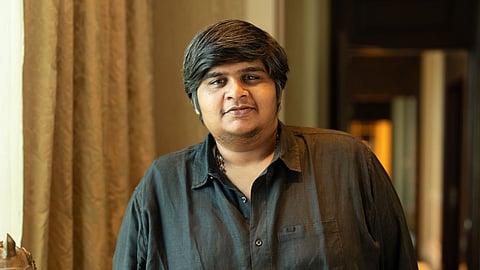


Karthik Subbaraj completed his ninth film with Suriya’s polarising Retro. He’s also among the first crop of Tamil filmmakers to make it to the top after entering the industry by making popular short films. Contemplating his 13-year career, THR India asks him about his fears, regrets and mistakes.
Retro is your ninth film. But what was the dream before you made your first feature? How many films did you want to make?
I didn’t have a specific number. But I was sure I wanted to be like Clint Eastwood. He’s more than 90 years old, and he’s still making films. I wanted to have that same energy and passion for films until I died. Initially, I thought a film would just take six months to complete. But I’m not able to move on to my next film until one film releases. So, when I talk about films like Retro, ideally, it requires at least a year. But if it’s an indie film, then maybe it takes around six months. How many more films would I be able to make if I continue at this pace?
You are among the first Tamil directors to have made it to the top after a stint of making short films. If you were starting today, would your approach have been different?
I don’t think there’s one route you can call the best. I had the support of a reality show like Naalaya Iyakkunar back then, which was also popular on TV, airing on Sundays. When producers were on the lookout for new directors, they would find filmmakers like us because of the show. Today, I still feel short films remain the best medium to hone one’s craft, but I cannot say that it's the only way. If I were to start today, I do not think I would have made videos for Reels or Shorts. I still feel I would have made short films and then uploaded them on YouTube.
When you’ve written a scene and have a plan in mind for its staging, do you keep an option to change the staging on the sets?
No, I don’t take that liberty. We discuss the staging of every scene, and we also have the shot division, storyboard and camera movement worked out. Even the equipment we call for is based on the planning. If I just call for a Panther or a crane and not use it, it becomes a major waste of resources, so we usually work it out in detail.
Do you feel ideas have an expiry date?
I don’t think ideas have an expiry date, but I’m always afraid of the possibility that someone else might make a film based on a similar idea I had thought of. I always want to get started with a film before it’s too late.
Have you ever watched a movie and felt it was too late?
I felt that was going to happen with my film Mercury (2018). I had already made it, and it was in post-production when I started hearing a lot of things about A Quiet Place (2018), which was released just two months before Mercury. The themes are very different, but because A Quiet Place was released first, people began to compare my film with that. They also do not apply the logic that a film like Mercury had to be thought about a year ago. But the comparison was very demotivating.
Do you ever fear that you might run out of ideas, or that you might wake up one day entirely blank?
This question is very, very scary. I hope this doesn’t ever happen, but I’ve not yet thought about it. All I can say is that I pray that the day never comes.
How do you see yourself as a director? Are you a cinephile who makes movies about important issues, or is the messaging more important than the cinephilia?
If a film talks about life or a deeper emotion, it won't have a filmmaking style to it…it’s called an art film. That’s what the notion used to be. But if you take a Tarantino film, he’s still talking about serious stuff. Over here, the logic seems to be that if you’re making a highly stylised film, then the story needs to be very straightforward with a basic hero and a basic villain. I just want to break that notion and bridge the gap between a stylised film and a serious film that discusses a serious topic.
Which is your most autobiographical movie?
I’ve not admitted it much then, but it’s Iraivi. Now I can admit it.
Which film of yours are you least satisfied with?
I don’t have any major dissatisfaction with any. Whenever I get time, I sit down to watch parts of my films. But if you ask me which of my films deserved a better reception, I would say Mercury. Iraivi also did not perform too well theatrically, but it got rave reviews. But with Mercury, I feel it didn’t even reach people, although they could still have watched it as a pure horror thriller.
When you sit down to write, do you often think of stories without an element of crime?
No, I think crime is always a part of it. Whenever I write, the protagonists always have a grey shade. I think even gangsters have become a part of my films. The protagonist might be involved in crime, but the film itself isn’t a story about gangsters. Even Mahaan is not a gangster film, per se. It has more to do with his ideological battles, even if he runs an alcohol company. But I guess guns and action are a part of all my ideas, and I don’t regret it either.
Finally, in the imaginary scenario that a producer comes to you with a 1000 crore budget, what kind of film would you make?
I think I would have loved to make crazier, wilder films that fall in the indie space. When you’re making a film on a budget, you need to satisfy a certain type of viewer. We have that pressure to recover the budget we spend on the film and then make a profit. But if I get that kind of a budget, I don’t think I’ll make one 1000 crore movie. A budget like that today involves a film with a lot of CGI that will need to be shot with green screens. I hate that kind of filmmaking; I want to make real films set in real places with real people. Maybe I’ll make 20 or 30 films with the 1000 crores, and then produce films with the remaining budget.