

In the high-stakes world of cinema, where physical transformations are routine, Bollywood’s biggest stars are increasingly turning to Ayurveda for balance and longevity. From strenuous training for action-packed roles to extreme dietary shifts and changing schedules, actors frequently push their bodies to the limit.
But what happens once the cameras stop rolling?
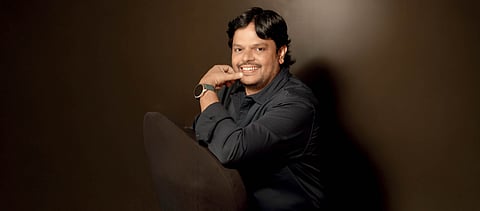
Many A-list celebrities rely on Ayurvedic expert Dr. Sudhindra Uppoor, founder of the Ayurshree Ayurvedic clinic, to restore their health, detoxify their systems, and regain inner equilibrium. With clients ranging from leading superstars to IPL team owners, he says Ayurveda isn’t just about herbal remedies, it’s a lifestyle.
“There are quite a few actors who come to me, and once they finish shooting, they take 7 to 10 days off and come for a cleanse,” Dr. Uppoor reveals. “Since we do blood work before and after the cleanse, we see that there is a complete reversal. There was a celebrity whose liver was showing elevated parameters because he was consuming protein powders to build a six-pack. But after our cleanse, his parameters were so normal that his dietitian in Mumbai wanted to come and meet me for her own consultation!” he adds with a laugh.
In an exclusive interview, Dr. Uppoor shares insights into the routines of Bollywood’s biggest names.
What was your introduction to Ayurveda?
I studied the CBSE syllabus in an English medium school. My dream was to become a computer engineer in the US, but my [maternal] grandfather is a famous Ayurvedic doctor in the South. He called my father and said that I was suitable to pursue this science. I didn’t want to, but he insisted so I said I would go for a week, just to satisfy him. I joined the SDM College of Ayurveda in Udupi. Some lecturers were talking in Sanskrit, others in Kannada. I was not interested and fell asleep on the last bench. A watchman came around six o’clock in the evening to tell me everybody had left. I was bored so I put my hand under the desk and found a book. A classical Ayurveda textbook [claimed to have been] written in 400 BC, called Charaka Samhita. I started browsing through it and when I looked up, it was 8 pm. I had fallen madly in love with this science. This is how sometimes arranged marriages work. [Laughs.] I went to my grandfather’s house straight away, fell at his feet…and never looked back.
You often stress on moderation. What exactly does that entail?
In terms of food, there’s no need to follow very strict diets. Just follow that one word, sama, which means moderation. You want to eat a pizza, have a slice. But if you eat the whole pizza, you’re going to get into trouble. Even in the case of emotions, hatred and envy are the main reasons for diseases. You need not live a saint’s life — enjoy yourself, but be it with food, emotions, or balancing professional and personal life, everything should be in sama.
How do you follow an Ayurvedic lifestyle in the modern day?
This is my 25th year in practice, and in my experience, Ayurveda doctors must adapt to the modern day. For example, the Ayurveda book asks one to wake up in Brahma muhurta, which is 4 am. But at the time [when the book was written], there was no electricity so people used to finish dinner by 6 pm, and they would unwind and sleep by 7 pm. Today, because of urban jobs, people can sleep only by 11 pm so asking them to wake up at 4 is impossible. So, we adjust it and ask them to wake up by 6:30 am. And I’m not criticising the tradition, but another instance is traditional Kerala Ayurveda medicinal prescriptions that use kashayams [liquids], which come in big glass bottles. They must be mixed with water and taken throughout the day. For those who are travelling, how can you carry those bottles? Doctors must adapt and make sure they don’t lose patients or the tradition of Ayurveda.
Since you have many celebrity patients, what’s one treatment they typically request?
Panchakarma, which is five techniques of detoxification. If you do a seven-day cleanse, there’s no need to go to any beauty parlour. Your skin and hair will glow. Many of my celebrity patients come to my clinic for this cleanse, just before a shoot or an IPL match. This detox requires a very strict diet, but only for seven days. Just like you take Sundays off, give your body seven days off, once a year.
What’s your take on the diet culture?
As we discussed, moderation. Going on a carb-free diet, for instance — carbs are such an essential part of your diet. Serotonin is the hormone that is important for good headspace, and there’s another chemical called tryptophan. Tryptophan is converted into serotonin only if it is taken along with carbohydrates. So if you don’t eat carbs, you may have six-pack abs, but you won’t sleep well and will be anxious.
What kinds of herbs do celebrities take?
There are fantastic single herbs in ayurveda. For example, the herb for radiant skin is manchishta. For girls with PCOD or hormonal issues that lead to acne and poor hair quality, there is a herb called shatavari. Almost every celebrity patient of mine takes this. Similarly, the herb arjuna hridya is excellent for the heart, bhumyamalaki for the liver, gokshura for the kidney.
How are your celebrity patients different from your non-celebrity ones?
They have huge expectations. If there’s a patient in front of me, and a celebrity calls, they get hurt if I don’t take the call right away. But most of them are amazing people. The leading star of Bollywood is so courteous that he made us feel at home when he took us to his shoot…treating us like VVIPs. Another actor who comes with his wife is so disciplined that he said he couldn’t take Ayurvedic ghee one morning because a jyotish told him he should have a spoon of milk and jaggery on an empty stomach. He’s a pure vegetarian, a complete teetotaller who doesn’t smoke — well, apart from on screen. Another film hero didn’t consume salt for a month to look a certain way. What I’m saying is, they’re very disciplined.
What’s the biggest myth about Ayurveda that you’d like to debunk?
The first thing is: One might think there are too many dietary restrictions and lifestyle changes, but you should only follow it as much as possible. For instance, if I say don’t have gluten — just give it your 80 per cent. The second myth is that if you are taking Ayurvedic medicine, you have to be a vegetarian. Absolutely not. Ayurvedic books talk about consuming different types of meat and even alcohol, according to your body’s constitution. The third is about needing to be celibate, whereas Pumsavana vidhi in Ayurveda talks of the auspicious days to conceive and Garbha Samskara tells you what herbs a pregnant lady should take, and what ritual she should follow in order to deliver a healthy baby.
Another myth is that all Ayurvedic medicines contain heavy metals. There are two types — Van Aushadhi, or herbal medicine, and Ras Aushadhi. Rasa means mercury and is supposed to have other heavy metals. But they are added in bhasma (nano particle) form. You can ask an Ayurvedic doctor to prescribe only herbal medicine, though bhasma simply acts as a catalyst for the medicine’s potency to increase. Then, it just passes through urine. Kidney or liver damage only occurs if the bhasma is not prepared perfectly. You should check the company whose Ras Aushadhi you are using. Also, if an Ayurvedic medicine is not working quickly, the doctor has not diagnosed you properly. If you have an emergency, go to an allopathic doctor but when you want to maintain a lifestyle, come to Ayurveda.
The information on these pages does not constitute medical advice or diagnosis.
To read more exclusive stories from The Hollywood Reporter India's March 2025 print issue, pick up a copy of the magazine from your nearest book store or newspaper stand.
To buy the digital issue of the magazine, please click here.