Mira Nair: I Really Wanted Zohran In 'A Suitable Boy,' But He's The Most Reluctant Actor
Mira Nair on crafting her cinematic legacy and why she has no chance of getting her son, New York city mayor Zohran Mamdani, to ever act in a film
It’s been a busy few months for filmmaker-producer Mira Nair. Her son, Zohran Mamdani, a 34-year-old Democrat, recently made history as the first Muslim mayor of New York City, and the youngest one since 1892. Nair hasn’t had a moment to catch her breath — especially since she has already dived headfirst into her next project only days after the poll results were announced. But she isn’t complaining.
The 68-year-old meets The Hollywood Reporter India for a conversation on Zoom in the early hours of a weekday from New York, beaming in a bright yellow kurta, raring to go. “I agreed to do this interview because you said it is on Monsoon Wedding’s 25 years, not Zohran,” she says with an impish laugh, and immediately follows it up with, “No no, I’d be happy to talk about him.”
Her sunny disposition tries very hard but fails to contain her restlessness to go forth and tell another story that matters to her — one that she invests in so deeply that it consumes her like a fever dream.
There are stories Nair believes only she can tell, and perhaps, she’s right. On this day, Nair starts 24 years ago, recounting how she arguably changed the ways in which Indian weddings were captured in the popular imagination. She journeys all the way to the present, to end the story with her son, who, in her words, “has brought the world the gift of hope”.
But of course, it’s just as much her story too — she is, after all, “the producer of the candidate” who has won and captured the popular imagination of today.
Edited excerpt from the conversation.
THR INDIA: Monsoon Wedding is going to turn 25 next year. It made it to The Hollywood Reporter India’s list of the 25 best films of the 21st century. How do you look back at the film and its legacy?
Mira Nair: I mean, the Bhagavad Gita says, beware the fruits of action, and I certainly had no idea that when I set out to make what I thought of as an intimate family flick, it would, 25 years later, become one of the most heralded films. I make films to entertain, to get under your skin, but also to help us see the world anew — or to see it in ways people would rather you didn’t, to see the unseen.
Monsoon Wedding came from that impulse. I remember watching Hum Aapke Hain Koun...! with my whole family in Delhi. I adored the tamasha (noise), the gaana, the 21 songs, but it was utterly unreal — nothing like our ghar ki shaadiyan (weddings at home). That sparked the desire to do a reality check on a wedding. And when you do that, the secrets inevitably emerge: the family dynamics, who is who, what has happened to whom, the history of wounds. That was the idea.
I worked with the wonderful Sabrina Dhawan, who was my student at Columbia University, where I was teaching film. She was a generation younger than me, also from Delhi, and we were two Punjabi chicks wanting to tell this tale with grit, humour and reality. Before it was even written, I pitched it — quite literally made elevator pitches at the Cannes Film Festival — as a $1 million film. Eighteen people said yes, and I chose the best player. I made it with complete creative freedom, which is always my mantra: the smaller the budget, the greater the freedom.
It was always, for me, an equal story between the Dubeys and the Vermas, the served and those who serve. Also, the catharsis it brought to the prison of silence that most people who have suffered any kind of sexual abuse live in, especially within the family — it just blew that lid off 25 years ago. And this, I didn’t expect — but of course I wanted. And one of the core reasons for making Monsoon Wedding is Rhea’s (Shefali Shah) story.
It also became one of the first portraits of a globalising India. And now, 12 years after creating the Broadway-bound stage musical, I still see those waves of embrace — the story’s power continues to travel.
THR INDIA: You mention how bigger budgets mean lesser freedom and the opposite is true too. But with Monsoon Wedding, you saw major commercial success. How hard is it to balance commercial pressures with principles?
MN: Well, the success of Monsoon Wedding immediately brought me Vanity Fair, a sort of $50 million epic that Focus Features wanted me to direct. And I did, because I’d loved that novel growing up — it was about the first badass chick, Becky Sharp, which I adored reading at Loreto Convent (Shimla). But what fascinated me, despite so many adaptations, was that no one had looked at how William Makepeace Thackeray had actually written it: that the empire raping the colonies led to the creation of a possible Becky Sharp, someone who could ascend the very rigid hierarchy of English society. That colonial-empire axis had been completely ignored, and for me it was essential to making Vanity Fair.
So, yes, the opportunity to make bigger films came very quickly after Monsoon Wedding. But even before that, I’d had several studio movies. And I don’t change what I want to make in my life; I’ve always been pretty ruthless about that. It’s never about being on an A-list of directors — it’s about doing what I want to do, doing what other people do not do. My criterion is simple: if other people can make this film, let them make it. But if I know I can make it with a point of view I will never otherwise see, then I make it.
And honestly, the struggle is the same. When I was making The Reluctant Fundamentalist, no one came — they didn’t want to touch a political film that said the unsayable, which is precisely why I wanted to make it. It all depends on what you choose to do. Even with my next film on Amrita Sher-Gil — it’s taken four to five years to get it financed. Success doesn’t mean you can always do what you want; it depends on how your mind works — and your heart.
THR INDIA: Has having your own production company (Mirabai Films) helped you keep your creative freedom and autonomy?
MN: Absolutely. I’ve produced my own work since before Salaam Bombay! (1988), and I’ve been deeply fuelled by the independent filmmaker movement, which taught us early on to try and retain one’s copyright. Giving up copyright is something I really try to resist, because that’s my work. And it’s not always possible with Hollywood; with studio movies you can’t own your copyright. But for me, retaining it is essential because it’s my pulse. It’s not only about the money — it’s about claiming your work.
THR INDIA: After Monsoon Wedding, Warner Bros. offered you Harry Potter and the Goblet of Fire, and you said no. Instead, you chose to make Jhumpa Lahiri’s The Namesake.
MN: Yeah. What was happening then was that I had just finished Vanity Fair. Warner Bros. had seen it, and they loved it. And they’d also had success with Alfonso Cuarón’s third Harry Potter, so they put two and two together and thought a “nice foreign sensibility” could do something exciting. So, we began a very long round of discussions. It wasn’t an offer on the table — it doesn’t work like that — but these discussions went on for months.
At the same time, I was already adapting what became The Namesake, and I’d just spent a whole year in England with Vanity Fair. I didn’t want to rush back there to make another film, but I kept doing both sets of meetings because Zohran had loved and learned to read with Harry Potter. That’s why I was even considering it.
But a moment came when my heart was divided. I wanted to work on The Namesake. So, I talked to Zoru — he was 14 then, I remember — and I asked him what I should do. And he said, “Mama, many good directors can make Harry Potter, but only you can make The Namesake.” He said exactly that line. And I just looked at him — it was like a light came on. I was liberated from the struggle of thinking I should please him. He saw right through it, as he always has. I didn’t have to set anything up. I just asked, and that’s what he said.
THR INDIA: Recently, actor Namit Das posted a photo of him with Zohran during the Monsoon Wedding musical’s rehearsals in 2017, where they’re dancing. Has Zohran been involved in the musical in any capacity?
MN: Well, he has been involved. In the earlier years, when we were workshopping for the musical — before we knew Namit, before we found someone who could sing, dance and be comic — we had a week-long workshop, and in that, Zohran played P.K. Dubey.
The workshop is to sell to investors, so you have the orchestra, the singers, the actors — everyone at microphones. Zohran performed P.K. Dubey, and (singer) Ali Sethi — who is like a son to me — did the singing.
I remember that morning: Zohran came home with a really cool haircut. I said, “Yeh kaise aaya beta (Where did this come from)?” And he said, “Aaj performance hai, we have to do the workshop.” He picked up a polka-dotted shirt — I don’t know where from — and dressed himself a little chalu (naughty), like P.K..
We started in this simple room with microphones on stands, no sets or props. Suddenly he’s performing P.K. — leaping on tables, doing the whole thing. When it ended, it was superb, this dual act with Ali. And one of the producing investors said, “Who is that boy? We’re not going on Broadway without that boy.” I reminded her recently that that boy is now our mayor.
THR INDIA: How much do you think all the art, cinema, literature and poetry he’s grown up around has shaped Zohran’s political career? We’ve all enjoyed the times he posed like Shah Rukh Khan, referenced (Amitabh) Bachchan, and then did his victory walk to Dhoom Machale — how much of that is you in him?
MN: It’s a portrait of our lives, really. What I love about Zohran’s campaign is that he completely embraces the multiplicity of our lives, as we do — certainly his parents do. We live actively between three continents and cities: New York, Kampala and Delhi. At home we’ve always spoken Hindustani. I was raised with the poems of (Faiz Ahmad) Faiz, with ghazals — so was (husband) Mahmood (Mamdani) — and our home has always been filled with music. It’s fuel for us: classical, Hindustani, African music playing all the time.
Films were what I did, but the core that makes me make movies is the same core that propels Mahmood to write his books. We’re always about showing the world what it is, holding a mirror with a certain amount of chalu-giri — by which I mean mazza (fun). And Zohran grew up very secure in this intergenerational home, with multiple aspects of who he is and who we are. That includes culture, music, poetry, naach-gaana, and the warmth of a family life where, though an only child, he never felt like one. Our home was open and porous. He loved meeting and discovering cousins — we used to joke he was “collecting cousins”.
As for the Bollywood aspect of his videos, that was entirely his idea. People think it’s mine, but it wasn’t. He’s grown up on it, he knows it works; he enjoys it. The only thing I helped him with was pronunciation — like humne dus-hazaar darwaze khat-khataaye hain (I’ve knocked on 10,000 doors) — some words were tricky. But he’s a natural performer and always himself. He doesn’t put on personas. And growing up in New York, hearing Arabic, Spanish, Chinese — living in that — he absorbed everything.
THR INDIA: So, were there any movies that you made Zohran watch as a kid?
MN: The movie he watched 16 times with his grandfather and with us — I didn’t watch it that many times — was Munna Bhai M.B.B.S. That is the number one movie for Zohran growing up. The other movie he absolutely loves is Zoya’s (Akhtar) Luck by Chance. He can recite it backwards.
On the more personal front, he somehow didn’t bring himself to watch Mississippi Masala until he was a young teenager. And when he finally watched it, he just went to the moon. He loved it so much — not only because it’s shot and made in the home he was born in, in Kampala, but also because, again, it’s about our lives in a very direct way for him. He couldn’t believe he had waited so long to see it. And then he kept watching it.
My husband wants me to tell you that he watched and loved Mughal-e-Azam, but I don’t really remember that so much — meaning he didn’t relate to it. But oh — a big movie, a huge favourite of his, is Govind Nihalani’s The Party. He saw it as a very young person and then kept seeing it. He loves that movie. Please write about that movie because young people do not know about it. Mostly, we only watched Indian films at home.
THR INDIA: If Arnold Schwarzenegger could juggle acting with being Governor of California, do you think you could ever convince the Mayor of NYC to act in one of your films?
MN: (Laughs) No, no. I mean, I literally offered him the role of the suitable boy — the main role in A Suitable Boy. And again, like with many of my things, if I need an actor to read opposite an actress or something, and if he’s home, he’s always been willing. But for A Suitable Boy — I really wanted him to play that role. And he didn’t. He said, “A lot of people die to be offered these things, but I don’t.”
He was the most reluctant actor. He never wanted it, and I had to accept that. And I was also grateful, because he knew he didn’t need it — that need people have to be an actor — he didn’t have that. But he’s got the goods. I always saw the charisma and the ability he has to actually make joy — to connect with people on a very direct and unfettered level. I’ve always loved that.
But I’ve got no chance of getting him into a movie. We threw a shirt on him for Queen of Katwe — besides the music he did — but yes, there is a shot where he plays a kid in that film, briefly. Otherwise, no. Now there’s no chance. He never wanted to, but I’d love it if he did. I’d love it.
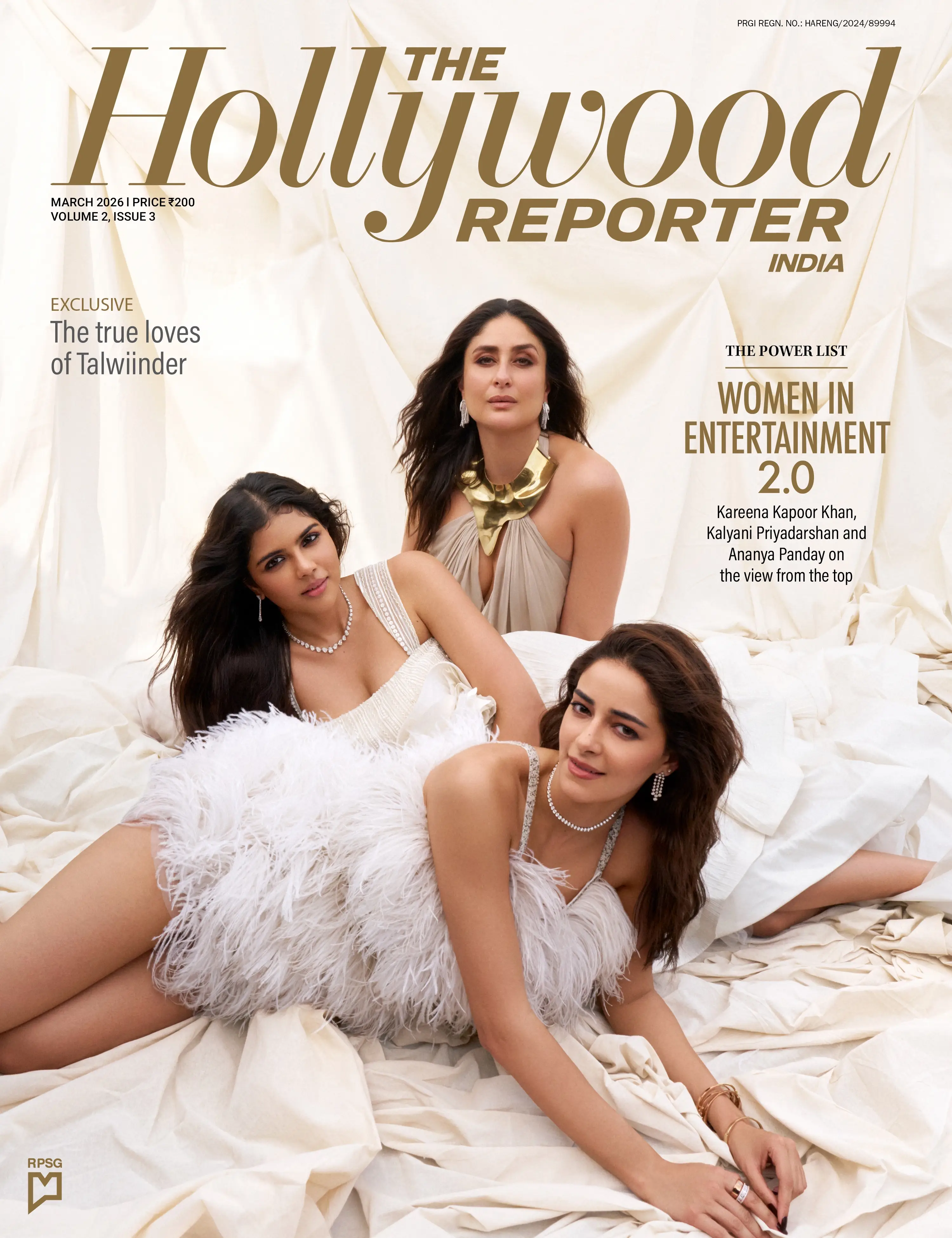
To read more exclusive stories from The Hollywood Reporter India's December 2025 print issue, pick up a copy of the magazine from your nearest book store or newspaper stand.
To buy the digital issue of the magazine, please click here.