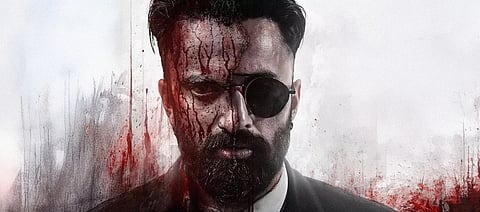


At times, it takes a rank outsider to change the rules of the game.
Judging by how the Malayalam film Marco was promoted, it ignored everything you’d assume to be the norm in the movie business: the producer flaunted its ‘adult’ rating, and even committed the unthinkable act of telling family audiences to stay far away from the movie. But this counter-intuitive approach has worked big time, attracting a specific target audience in a way we’ve rarely seen before.
As Marco touches the 100-crore mark, THR India speaks to the film’s producer, Shareef Muhammed, on why the violence worked well for the audience, how a dozen Land Rover Defenders were used in the action sequences, and the reason behind the makers insisting on Ravi Basrur’s music to give the film pan-Indian appeal.
Edited excerpts:
Filmmaker Haneef Adeni made 'Marco' right after two films that did not work at the box-office. Yet, you were confident in his abilities…
Haneef Adeni’s last two films might not have performed as expected, but that doesn’t define his abilities or question his skills as a filmmaker. We were aware of his strengths, especially his prowess in scripting, and I strongly believed in his process.
Moreover, Marco marked his return to his favourite genre, and we were all confident about his vision. One cannot forget how Mammookka was given such a stylish characterisation in one of Haneef Adeni’s earlier movies—which reinforced our trust in his talent and vision. We knew his potential and believed that with the right support, he could deliver something extraordinary—and he did.
You mentioned that you are personally a big fan of films like Marco. How did you become a fan of this genre? Were video games an aspect of it?
Yes, I enjoy neo-noir films that deliver an adrenaline rush through their intense storytelling, gripping visuals, and morally complex characters. These films resonate with me because of their raw energy and unpredictability. Video games have also played a role in shaping my interest in such narratives, as they offer similar immersive and action-packed experiences. I’d love to explore creating content that blends these elements in the future.
You might have been prepared to face some criticism for the way violence was going to be portrayed in this film. How were you prepared to handle the backlash in case people attacked the film’s brutal scenes?
The brutal scenes are key features of the film, and an integral part of its narrative. Our intention was to provide the audience with a cinematic experience that stayed true to the story we wanted to tell. Cinema is not reality, and we believe the audience has the maturity to understand this distinction. Just like every coin has two sides to it, there is always good and bad in any creative work. We choose to focus on the good side—the craft, the vision, and the effort that went into making this film a unique experience.
Personally, what is your favourite scene? When did you feel the strongest about the film’s potential?
My favourite scene is the staircase fight—its raw and intense form showcases the film’s unique action style, along with Unni Mukundan's dedication and hard work for the film. The moment I truly felt the strongest about the film’s potential was during the pre-climax sequences; the sheer brutality from the villains in that sequence creates a deep emotional connection.
Unni said that whenever he asked you for something, you would revert by giving him double of what he had requested. Didn't this overshoot the budget?
From the very beginning, we had a clear plan for allocating the budget strategically, while controlling unnecessary expenses. Everything Unni requested was to elevate the film, and we ensured that those demands were met.
During pre-production, I was also one of the reasons behind increasing the budget by insisting on a music director like Ravi Basrur (of KGF fame) on-board. While there were options within our industry, I was adamant about having him because I believed his work would elevate the film’s quality and give it a pan-India appeal—a decision that ultimately paid off.
We were also willing to invest in elements that added significant value, such as top-tier talent and impactful additions like the Land Rover Defenders in the film. At the same time, we were mindful of cutting costs where it was possible.
Did your expertise in running other businesses help in the production process of Marco?
Film production can be approached in two ways—it can be made easy, or it can become complicated, depending on how you handle it. As a producer, one could simply allocate the required budget and sit back. But I personally believe in being deeply involved in every stage of production.
Even though Marco is my first film, I approached it with the same level of dedication and precision as I did in my other ventures. What made the process smoother was our decision to bring a corporate structure into the production process, all the while respecting the traditional rules and regulations followed in filmmaking—without compromising on creativity.
What are the other issues for the film getting an ‘A’ certificate? Doesn’t this mean that the film will not be bought by satellite channels? Were you worried about that aspect and loss of revenue?
The essence and unique selling point of Marco lies in its raw intensity and violence, which are central to the film’s appeal. Globally, this genre enjoys a thriving, strong fan base, and we are optimistic that Marco would achieve similar success. While the ‘A’ certificate does limit the audience to some extent, it was a calculated decision to preserve the authenticity of the film.
In terms of satellite rights, we were not particularly worried. Creating a satellite-friendly cut of the film was a straightforward task for us, as Marco also contains many family-oriented elements.
As for revenue loss, that’s a reality in any business, and we were prepared to take this calculated risk. Additionally, we anticipated significant revenue from repeat viewings by the youth audience, who are particularly drawn to intense action films.
What was your strategy behind the marketing of this film? Not only did it get an ‘A’ rating, but you also chose to be very vocal about its violence—both the ideas worked big-time.
Our marketing strategy for Marco was to stay true to what the film represented—raw intensity, violence, and an unparalleled cinematic experience.
From the very beginning, we consistently engaged the audience by providing timely updates, creating anticipation, and positioning the film as something fresh and exciting. One of the most significant elements of our approach was pitching Marco as the most violent movie ever—and we delivered the same.
What we marketed was wholeheartedly accepted by the audience, and their overwhelming response validated our campaign. We also introduced a relatively uncommon tactic in film promotions: daily updates. By sharing behind-the-scenes Reels every day — since our primary target audience was the youth — we focused on crafting content that resonated with them. We actively listened to their feedback, responded to their opinions, and adapted our strategies in real time. While some parts of the plan were pre-decided, many spontaneous decisions based on the audience's reactions played a key role in the campaign’s success.
What were your expectations from the Hindi release?
So far, it’s been very good. Expectations were very high with the Hindi release. Initially, we started with a limited number of screens, but the screen count and shows are increasing day by day due to the huge positive response. We are planning for a wider release in the coming days. It’s heartwarming to see the Hindi audience embracing our film with open arms. The results speak for themselves, and we are deeply thankful for the overwhelming support we have received.