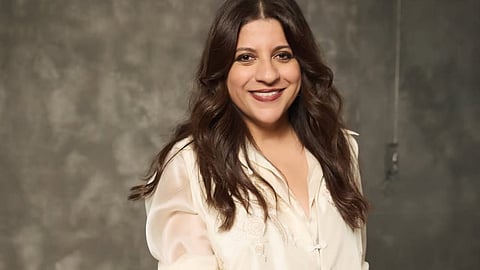


Filmmaker Zoya Akhtar doesn't hold back when she talks about how poor Bollywood's representation was of LGBTQIA+ characters. The filmmaker fumes when she recalls how, for decades, the Hindi film industry operated only with lazy tropes, which was "scary" for those already living a life with the fear of never being understood.
"Most communities were badly represented. I mean, women were badly represented and everything became stereotypical. There was the good girl and the vamp. The LGBTQIA+ community was either not there on screen... or when it was there, it was the butt of jokes, ridiculed and shunned," Akhtar tells THR India as she sits down to promote her latest production, In Transit.
The Prime Video documentary series, backed by Akhtar and Reema Kagti, explores the lives of trans and non-binary individuals navigating love, identity, and the boundaries of gender.
Akhtar says the independent film circuit was far more proactive in mounting movies with honest narratives, but those weren't widely watched on the big screen, leaving only the mainstream space to set the discourse—which it failed in doing so.
"This (representation) was happening in the indie space, but the mainstream stuff was a joke. So if you're a young, impressionable mind that is actually feeling different from people around you and has nobody in your immediate social space to speak to or look up to, this kind of on-screen representation can be extremely scary and a very isolating experience," Akhtar says.
Produced by Akhtar and Kagti under the banner of Tiger Baby, the four-part docuseries is currently streaming on Prime Video. In Transit follows the lives of nine remarkable people from across India as they navigate life beyond the gender binary - confronting, challenging, and ultimately reshaping the status quo.
In Transit director Ayesha Sood also notes that the representation was worse when it came to trans people, who were almost always "demonised." Sood adds, "Beyond the joke, they were usually the scary, villain character."
While the on-screen representation was negligible, Akhtar says she is an optimist who has also seen the situation change within the industry.
The director, who made her debut in 2009 with Luck By Chance—at a time when several male stars had refused to play the part which was eventually played by her brother Farhan Akhtar—also reflects on how far the Hindi film industry has come.
"When I was growing up, you couldn't see any kind of consensual affection on screen. But for some strange reason, you could see assault. You are allowed to see sexual assault on screen, but actual consent wasn't allowed! And that I think has changed. Certain language and narratives have also changed."
"For Luck By Chance, I couldn't get a single actor to play that part because he wasn't heroic, and wasn't doing the right thing. But today, if I had to make the same film, I'd have a lot of people who would be ready to play that character. In Made in Heaven also, the lead character of Arjun is gay and completely out there in society. It wouldn't have been possible earlier," she adds.