From Deepika Padukone to Angela Bassett, Here's Why J.J. Valaya has Been Couturier to the Stars Since 1992
Between India Couture Week’s stage, and dressing Bollywood and Hollywood actors, J.J. Valaya designs legacies beyond borders.
Katrina Kaif, Aishwarya Rai Bachchan, Deepika Padukone, Bipasha Basu, Arjun Rampal, Milind Soman, John Abraham — you name them, and they’ve walked for JJ Valaya. But before they were household names, they were on his runway.
“All my favourite models are movie stars now,” the designer laughs. “They’re an ever-changing muse.”
In the heady, electric fashion shows of the late 1990s and early 2000s — long before Instagram and influencer culture — Valaya’s runways were the training ground for many who would go on to become India’s leading stars. “But there was no concept of the ‘showstopper’ back then,” he says. “Everything was about the clothes, as it should be.”
Now, fresh off the success of his recent India Couture Week (ICW) show, with an ambitious new vision for Autumn-Winter 2026 already underway, the designer gets candid about his past achievements and what’s yet to come.
Future Forward
Earlier this year, ICW — arguably India’s grandest fashion showcase — closed with Valaya’s show, leaving the audience somewhere “between the East and the West,” as he puts it.
Valaya explains how in the 18th century, the West was endlessly fascinated by the East. “They didn’t quite understand it, but they interpreted it. You saw it in chinoiserie — Chinese blue pottery interpreted in Europe. Or the Kashmiri shawl, which inspired paisley designs in Scotland.”
His collection journeyed through three zones: the Near East (Balkans, Albania, Azerbaijan), the Far East, and India — tracing the centuries-long exchange of aesthetics, art and identity. But this was no parade of the past. Valaya’s silhouettes are rooted in historical context but refashioned for a modern, global luxury consumer. “It’s osmosis,” he says. Drawing from the past but dressing for the future.
So, it was fitting that new actors Rasha Thadani and Ibrahim Ali Khan — faces of Bollywood’s next generation — closed this show. A fitting finale for a designer who takes pride in moving with the times. But to understand why that matters, one has to look at the bigger picture; the world that Valaya has quietly been building for decades.
The World of Valaya
However, those who are familiar with Valaya’s early trajectory understand that his instinct for building worlds — not just wardrobes — predates today’s trends in celebrity, fashion and luxury. In fact, in 1996, he launched JJ Valaya Life, a concept that was leagues ahead of its time.
“We opened with fashion, interiors, an art gallery, blues music and a café named Ella [inspired by singer Ella Fitzgerald], and even a florist,” he recalls. “Nobody in India was doing this.”
It’s why the J.J. Valaya story is also, in many ways, the story of modern Indian fashion. He was the first Indian designer to launch a website, the first to do a solo show, the first brand ambassador of Swarovski, and a co-founder of the Fashion Design Council of India (FDCI) in 1999.
“We had no benchmarks back then,” he says. “There were only a handful of us, and we had to create the industry. Fortunately, at that time, retailers started opening up — from Ensemble to Ogaan, Signature and Karma. But “fabulous” is how Valaya remembers Indian fashion in its nascent stages. “We grew with the industry, and it grew with us,” says the designer. He recalls a time when shows were rare and sacred. “They didn’t happen every week. The audience was excited and there was a camaraderie among designers.”
Of course, much has changed. Today, fashion weeks are calendared like corporate events, celebrity showstoppers dominate headlines, and many designer houses have become brand extensions of major corporations. “But it gives us more discipline,” Valaya says of the production cycles, as India settles into having fashion seasons, catching up with the rest of the world. “It is a natural evolution, even looking back at European couture: who was Louis Vuitton? A person sitting in a shop making trunks for the special families of Paris. And at one point of time, someone decided that this is a product with potential, and the brand needs to be corporatised.”
Hollywood Calling
The multifaceted couturier also turned costume designer during the COVID-19 pandemic. He dressed Eddie Murphy in Coming 2 America, styled Angela Bassett as Queen Ramonda in Black Panther: Wakanda Forever, and made headlines again when Bassett herself mentioned, in an interview with India Today in May 2025, how much she loved wearing his creations.
“It was one of the most exciting chapters of my life,” he says of working with two-time Oscar winning costume designer, Ruth Carter. “It was such a feast because Ruth is exceptionally brilliant, talented and a very lovely person. We had great chemistry.” His creations for Murphy and Bassett were not only visual treats on screen but also signified a crucial moment for Indian fashion in global pop culture.
“Fittings happened over video calls,” he recalls. “But it worked out so beautifully.”
So, with this experience behind him, would Valaya consider designing for Indian cinema? “Why not?” he asks, “but everything about us is larger-than-life, detailed and with a sense of culture, history. I don’t think I’d ever be able to do a masala movie.”
The designer adds that if he had to pick, he’d love to work with a director like Sanjay Leela Bhansali. Which isn’t a surprise, because the way Bhansali sees his films is how Valaya sees his designs.
“We find beauty in contradiction,” he says.
For now, he’s riding the wave post-ICW — but Spring-Summer is in production, and Autumn-Winter 2026 is in the works. His latest endeavour, “The World of Valaya,” like an Indian version of Armani’s Milan concept space, unites all his loves — fashion, home and photography — under one roof.
Then there’s a new line of bags, eyewear and accessories on the horizon, with his other brand, JJV Kapurthala. Multiple new flagship stores will also roll out across India, including a much-anticipated return to Mumbai after 24 years.
And yes — he’s certainly designing the Mumbai store himself. “I wouldn’t have it any other way,” he says.
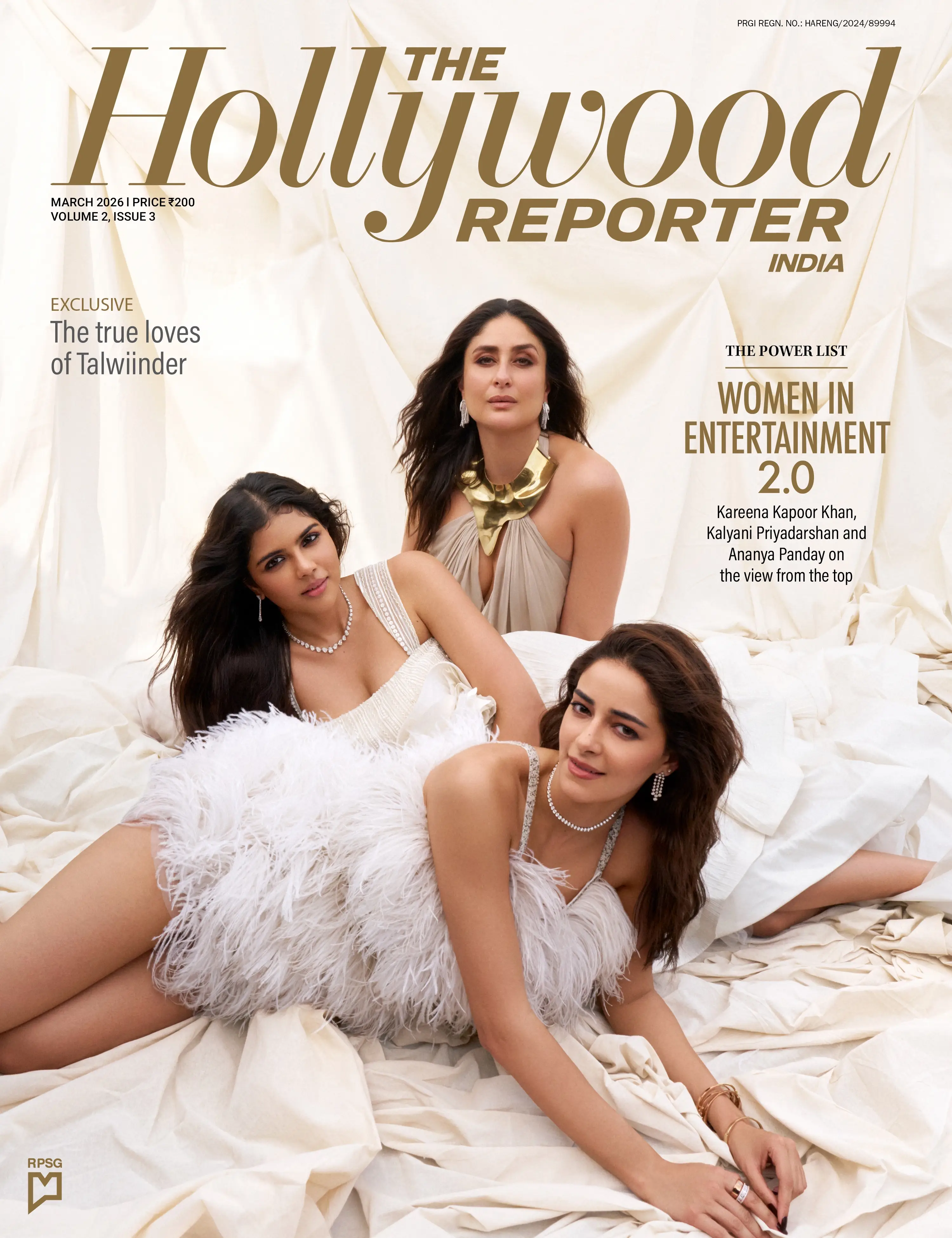
To read more exclusive stories from The Hollywood Reporter India's October 2025 print issue, pick up a copy of the magazine from your nearest book store or newspaper stand.
To buy the digital issue of the magazine, please click here.