

It’s easy to see why the makers of Jagame Sangeetham saw merit in a remake of Bandish Bandits (2020). The series explores a universally documented conflict — the friction between tradition and modernity, but in the context of music. Emboldened by the exercise in Prime Video’s hit original Hindi series, Jagame Sangeetham makes one variation to the central conflict. Carnatic music takes over Hindustani classical, and Jodhpur disappears into the scenic banks of the Godavari. It might seem like a relevant and bountiful update for audiences in the south familiar with the significance of classical Carnatic. But the show continues to remain in the original's shadow, unable to replicate it or add anything new to the offering.
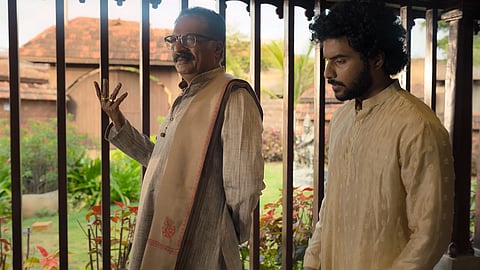
Balu (Akshay Lagusani) is the prodigy and grandson of Carnatic music virtuoso Shastri (Prakash Raj), who is training him to carry the baton. The baton here isn’t just carrying his family’s legacy, but also collectively rejecting any forms of music that commercialise the art. When Balu meets and falls for local pop star Pallavi (Sushmita Shetty), an emotional tug of war begins. His grandfather’s puritan soul puts up a fight against pop music, as Balu is further pulled into deeper tangles and learns heartbreaking secrets about his own family.
The setup is ripe, and we expect the characters to naturally follow the moving performances from the original. But Jagamae Sangeetham largely lacks the gumption that preceded it. Anand Tiwari and Amritpal Singh Bindra’s source material is evident in the Telugu series, which remains loyal. But in the process, it leaves behind a jarring disconnect that is hard to shake off. The dialogues innately makes sense, and we see why characters act the way they do. But the condensed episode lineup makes sure that there is no room for any real emotional groundwork.
Balu, the primary anchor of the series, never really gets the depth that he deserves, making important interactions and sequences — otherwise relevant to its world — largely stilted and pro forma. Sushmita and Akshay are sincere, but fail to make their romance or the tension in their double act palpable. Madhubala, who plays Saraswati, one of the most significant characters in the story, is frustratingly tight-lipped, and emerges from the shadows a little too late and with too little conviction. The show attempts to explore the gendered undercurrents of orthodox families and particularly the men who take away music from women, but these portions lack the nuance to make a deep impact.
The disharmony is apparent, especially in the later portions of the series, which needed a steady but light hand on its pulse. Vishal Chandrashekhar's score is pleasant. But the editing is needlessly choppy, and the writing is visibly confused with some of its characters — most affected by this are the brother who sweetly invents and eventually pledges his own percussion, and the fiancée who refuses to bring her head down while shamed. But these smaller details are sadly swept to the side for larger, empty swings.