
- REVIEWS
- FEATURES
- CANNES 2026
- LIFESTYLE
- GLOBAL
- LISTS
- THR VIDEO

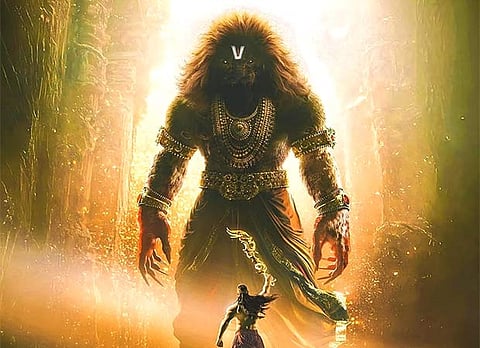
Ashwin Kumar’s ambitious Mahavatar Cinematic Universe has liftoff. The maiden film in the epic animated mythological franchise, Mahavatar Narsimha, has collected ₹17.58 crore in India (according to Sacnilk), an impressive haul for a homegrown 3D animated feature. The film in three days overtook 2005’s Hanuman to become the highest-grossing Indian animated film of all time, scripting a new and encouraging chapter for a format with mixed mileage in the country.
Presented by Hombale Films and produced by Kleem Productions, Narsimha was released in five languages on July 25. The Hindi version has led collections followed by Telugu, Kannada, Tamil and Malayalam.
The seven-film franchise will explore the ten avatars of Lord Vishnu, releasing over the next 12 years. The first film unravels the epic story of Prahlad and Hiranyakashipu, the demon king who was slain by Narashima, a part-lion, part-man incarnation of Vishnu. The story holds mythological significance as a tale of good’s triumph over evil, enshrined in the Hindu festival of Holi.
While Mahavatar Narsimha is running in theatres with English subtitles, director Ashwin Kumar has confirmed plans to release it English, Korean, Japanese, Spanish and Russian languages. The makers have doubled down on celebrating Eastern animation traditions, combining cutting-age visual techniques with ancient culture. “While it’s true that 3D animation in India hasn’t quite flourished, it’s about time,” Kumar told The Hollywood Reporter India in an interview. This is the beginning of that endeavour.”
Forthcoming films in Mahavatar Cinematic Universe include Mahavatar Parshuram (2027), Mahavatar Raghunandan (2029), Mahavatar Dwarakadhesh (2031), Mahavatar Gokulananda (2033) and Mahavatar Kalki Part 1 (2035), the franchise finally culminating in Mahavatar Kalki Part 2 (2037). “They will basically be standalone stories, but woven into one final thematic link. You can experience each of them independently, or as a part of a larger woven cinematic universe,” Kumar told THR India.