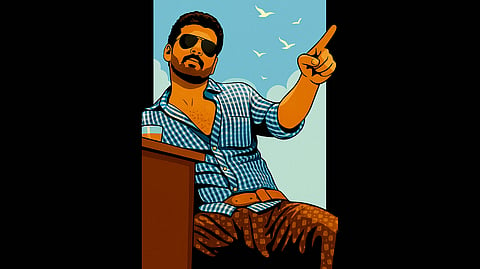


Ulidavaru Kandante, which translates to 'as seen by the rest' in English, is a pathbreaker in Kannada cinema, perhaps unlike any other. It was a film of many firsts for the industry. Director, writer and popular actor Rakshit Shetty, over a decade ago, mounted an intimate thriller set in coastal Karnataka, experimenting not just with subject, but also with form. One of the first thrillers in the language to be set in Mangaluru, the film introduced Kannada audiences to the Rashomon Effect (the unreliability of eyewitnesses) to uncover the story of a murder.
The film begins with a journalist unpacking a case, looking for answers. Audiences are introduced to Richie (Rakshit Shetty) in Mangaluru and, in the process, piece together stories of the Mumbai mafia, a haunting unrequited romance, and a pining mother's love for her son, all rooted richly in the culture of Tulu Nadu. While the film didn't impress with box office numbers upon release, it went on to become a cult classic among fans, spearheading modern Kannada cinema's new generation movement of the 2010s.
But the film was never made with the intention of being a benchmark, says Shetty. "It came from a very personal place... stories I had grown up listening to, the coastal culture I had seen around me, and a format of storytelling that I found really fascinating. It was the first time I was truly exploring myself as a writer." Shetty, who was born in Udupi, wanted to make a film where characters spoke the local dialect he grew up with — something that wasn’t common in Kannada cinema back then.
The Rashomon Effect, which Shetty uses to infuse depth and flavour to the film's various characters and their subjective truths, was a technique that fascinated him. Ulidavaru Kandante is split into six different chapters, which tell us the truth of the night of the murder, and the events leading up to it, with varying witnesses.
"I wanted to tell a story the way people narrate it in real life... fragmented, subjective, coloured by memory. That rawness is what gave the film its shape," says Shetty. His admiration for world cinema is starkly apparent in the film, too. References to Brian De Palma and Al Pacino’s Scarface are plenty here (Richie’s dialogue about the “Cuban boy” referring to Pacino’s Tony Montana in the film has a separate fan base), and so is the Tarantino touch. Shetty pays homage to the glowing suitcase from Pulp Fiction, layered perfectly with Indian cinema sensibilities. None of these hat tips are performative or forced by any measure. He infuses them with just the right amount of relevance to add more edge to the film.
It is also a film that is as technically strong as it is narratively shaky. B. Ajaneesh Loknath’s music serenades and cautions as the film progresses. The film is shot extensively in sync sound, lending much character and authenticity to its world.
The film, which features an ensemble cast of prominent actors from the industry still finds a prominent place in any Kannada cinema starter pack recommendation.
"If the film has done anything for Kannada cinema, I think it showed that we could experiment with form without losing the soul of our culture," says Shetty. "It gave confidence to filmmakers that local stories told with honesty can still feel universal. The reason it has resonated with people all these years, I believe, is because people saw themselves in it, their nostalgia, and maybe even their flaws. And because the film didn’t give easy answers, it kept living in their minds."
The whodunit leaves much to the audience's imagination, refusing to neatly tie loose ends together. "They [fans] discussed it, debated over it, even went back to watching it again years later to find something new. That’s how it has lived, that’s why it still feels alive."