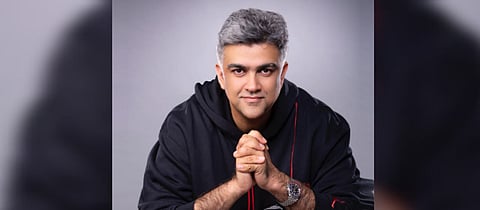


Filmmaker Siddharth P Malhotra has several mounted projects across television, films, and OTT. From the glory of the small screen with cult shows such as Sanjivani (2002) and Dill Mill Gayye (2007), the underwhelming performance of his Kajol and Kareena Kapoor-starrer We Are Family (2010), finding box-office footing with Rani Mukerji-led Hichki (2018), and, eventually, streaming success with Junaid Khan's Maharaj on Netflix last year, Malhotra has seen it all.
Having begun his career in the industry as an assistant director to Vidhu Vinod Chopra at the age of 15, Malhotra says the industry has changed a lot since then, where the passion and hunger of storytellers have been replaced by business and the optics of the market.
"The medium has changed, but you are basically dealing with the same people! The TV guys are now OTT executives, but I have been fortunate to tell the stories I want to, the way I want to," Malhotra tells THR India.
The filmmaker is currently mounting his latest Netflix thriller headlined by Parineeti Chopra, and is also busy locking the cast of another feature film Kamal Aur Meena.
Edited excerpts from an interview:
How much has the industry and the storytelling landscape changed through the decades?
There is way more awareness now, but what I find missing is the passion. Back then, everything was not about money; it was about telling a story. When we were doing episodes of Sanjivani, we used to be working with the writers' room in the Star Plus office at Saki Naka, Andheri. We would work 15 to 16 hours just to ensure that we got a better scene. That passion is not there today. I'm not seeing the hunger in filmmakers or actors.
There are a few, which is why I try and give opportunities to newcomers more than the established names. I've launched the biggest stars on TV, from actors, directors, to writers. But I've just seen people come and go because here, you cannot take anything for granted. If you're getting to do something and be in this line, you must not forget that there are people way more talented, who just don't have the opportunity. When you start taking your job for granted, and you think you know it all, someone will come to take that spot away.
Can you give us a sense of the industry today?
Some platforms are sitting on about 50 to 60 films that they have to release. Netflix and Amazon Prime Video are the only ones doing OTT originals; nobody else. That whole market has gone now. The streamers want commercial, entertaining, theatre-like experiences. Today, if you want to do something really edgy, which you won't be allowed to do on the big screen, you will think of coming to OTT... but gone are those days as well.
Right now, there is no work.
Even TV shows have become competitive. In our time, we would run our shows for two to three years, but today they are axed within four weeks. By the second week of TRP, you're already told, 'Hey, you've got two more weeks to go.' It has become cutthroat in every way, which is why I believe that you can't just be good enough. You've got to be outstanding, and even if you're outstanding, you need luck by your side.
Is there any way out then?
Budgets make or break you. I count my blessings that Maharaj, and before that Hichki, did well, and I got more work. The only way out is if you deliver more than what you've promised and at a ticket price that works for everybody. Because nobody's here to lose money.
Ten years ago, some films were being made on a budget of ₹30 crores, ₹15 crores, and ₹12 crores. Today, charges of technicians and actors have gone up, and these are almost their fees, which means you can no longer make a film on budget.
There was this whole YouTube era when TVF broke out with shows like Permanent Roommates (2014), Tripling (2016). What was the budget then? ₹1 lakh per episode? Although these were sponsored by a brand, they did well. Today, what is the budget? ₹2 to 3 crore per episode, and in some cases, ₹5 to 10 crore as well.
It's not like people don't want to make content. But for that, they've got to keep pumping in money, but at a level where they feel, "Okay, it's not a lot," so that even if it doesn't work, they are okay with it. But right now, the stakes are so high that everybody's scared of losing their jobs.
The movie industry across the globe is going through a dry spell; even Hollywood is struggling with a situation where only IPs are working...
Absolutely. So, where is the chance of originality ever emerging? Which is why Malayalam, Tamil, and other industry films are excellent because they're making films on a budget, have controlled ticket prices, and they even have a cap on how much they spend on their P&A. When everything becomes a business, it overtakes art.
But you have made big films with big production houses. Was the entourage cost that big a deal a decade ago?
Not at all. Hichki was made with a budget og around ₹12 crores. We are Family (2010) was made with ₹18 to 20 crore, all in, with the filming done in Sydney. All my films have been completed below the estimated number of days. If you're profitable on the landing cost, there's no way you're going to lose money. The people I have worked with — Dharma or YRF — have a thick machinery on how to operate. So, entourage costs were not an issue, at least among my films. Now, about my next few films, which are Kamal Aur Meena and others, maybe we'll get to know very soon (laughs).