

Season 1 of Freedom At Midnight just about passed a difficult exam. Based on the 1975 book of the same name, the narrative was situated in an anticlimactic period between the history we celebrate and the skeletons we bury. The storytelling unfolded between stories: the British Raj is nearing an end, a Partition of India is proposed, Louis Mountbatten takes charge, INC leaders Jawaharlal Nehru and Sardar Vallabhai Patel struggle to negotiate with a hostile Mohammed Ali Jinnah, there is violence and unrest, and freedom-fighter-final-boss Mahatma Gandhi mourns the breaking of a nation. This was anything but the heady patriotic tale we are wired to expect in the 2020s. It was more of a campy workspace drama — a bureaucratic backroom thriller in which the seeds of future conflict are sowed under the guise of a familiar independence tale. The season was hit-and-miss at its best: stagey film-making, roleplay-like performances, but distinctly human in its treatment of the race against time and timelessness.
Season 2 of Freedom At Midnight feels more accomplished — and alive. It could be the context: much has changed since the release of Season 1 in late 2024, and the very act of existing for movies like Ikkis or shows like Freedom At Midnight becomes an act of artistic resistance; they're defined by callbacks to an era in which lands and loyalties are divided but lives and bonds are not. It could be the subtext: by design, FAM is the origin story of flawed democracy, messy pluralism and religious bigotry in an age of good-versus-evil binaries; it’s almost an anti-historical for how it reminds us that we’ve come full circle under the guise of coming a long way. It could be the text: the narrative of Season 2 is sharper as it treads the bittersweet year between independence, partition and the assassination of Mahatma Gandhi; it laces the respite of new identity with the guilt and trauma of internal estrangement. It could be the commentary: secularism was always the original dream — less of a calculative political one and more of an instinctive cultural one — until male egos and allegiances turned fresh borders into cracks that continue to be excavated by the opportunism of modern cinema. It’s not so much an ode to an undivided India as the sobering genesis of a divided one.
It could also be the craft. Creator Nikkhil Advani has quietly established himself as a long-form master, and it shows in how the composed rhythms of FAM 2 reflect the controlled chaos of the two seasons of Mumbai Diaries. The camera captures the stillness of conflict with long tracking shots, visual empathy, and close-ups of thinking characters tinged with a sort of emotional geography. It’s a testament to his skill that a series rooted in conversations, accusations, debates and silent feelings feels so kinetic and urgent; the verbal jousts and speeches play out like well-choreographed action set pieces, where words and personalities accomplish what VFX and scale cannot. There are times when the ‘hindsight syndrome’ emerges. Characters reiterate their desires — like PM Nehru thundering “I will not let religion dictate this country,” or Gandhi batting for Muslim minorities while Sikhs and Hindus start to resent him — as if they are speaking from 2026. But the dialogue is so naked that it often sounds like a cautionary plea to coming generations and governments. There’s a perpetual anxiety on their faces that makes it look like they’re in a time-machine story, where these grand men have probably traveled to 21st century India — to a fractured future — and are now backpeddling to desperately fix the past.
On the surface itself, so many elements work. For starters, it’s a fine example of how to use fluid montages to do the work of exposition, transitions and songs at once. Editor Shweta Venkat Mathew does a solid job of compressing the magnitude of events into evocative capsules of time and tide — whether it’s the juxtaposition of a girl playing Beethoven on the piano with a tense Mountbatten-Jinnah chat, mobs attacking a doomed train to Amritsar, Gandhi going on another hunger strike until he secures peace-agreement signatures of all communities, or even a lawyer like Cyril Radcliffe buckling under the pressure of ‘drawing the line’ that would spill blood for decades ahead. This includes the seamless fusion of black-and-white archival footage into several key scenes, almost as if to suggest that truth is often nothing but remastered reality; what started as a gimmick of adaptation now becomes a marker of interpretative drama. My favourite montage nails the gravity of Nehru’s iconic “tryst with destiny” speech; the ticking clock that scored much of the first season finally stops at midnight. I’ve heard and read of this moment a thousand times, yet the goosebumps on my arm indicated that it was no longer an isolated one; it felt like atonement, a small victory, when placed in a broader timeline of loss and reconciliation.
Another reason this series works is because of its characterisations, especially in this era of Bollywoodised reverence. At no point do the main players — Nehru, Patel, Gandhi and others — mine their status as leaders of a particular party; it would be tempting to set the record straight, given that the INC has regularly been cast in an unflattering light in recent years. But FAM 2 is not about politicians and politics and propaganda; it’s about extraordinary people struggling to keep it together in the face of monumental change. It’s disarming to see larger-than-life figures bickering, sulking, blackmailing, fretting and being indecisive. The series strips its setting of aura, reframing it as more of a dysfunctional family drama: Nehru and Patel as the well-meaning but clashing brothers, Gandhi as their disapproving and stubborn father, Jinnah as the bitter and delusional outcast, and Mountbatten as the perplexed babysitter. The tone is The Crown-coded this season, and it’s not just the orchestral background score.
At one point, you literally see Nehru and Patel complaining to Gandhi that “they resorted to bloodshed first bapu, we only retaliated!” after the first Kashmir war — which would be cute if not for how prescient it sounds. At another point, Jinnah claims that Nehru and the Indians staged their own communal riot to manipulate the discourse, and later refuses to credit Gandhi when told that his strike was the reason Pakistan was no longer bankrupt. At another point, a follower is humbled by the sight of a disoriented Gandhi searching for his pencil; at another, Nehru loses his pacifism and sounds radical when it comes to the ‘conquering’ of Kashmir, the land of his ancestors. Even Louis Mountbatten, who goes from Last Viceroy of British India to the first Governor General of India, transitions from colonial power-broker to external therapist over the course of 7 episodes. Watching the season is a lot like noticing the little food stains and creases on those over-produced pages of history. Each of its characters are still yet to fathom the nuances of patriotism, because the borders are yet to segregate their baggage. They’re forced to play roles after fighting to be themselves for so long.
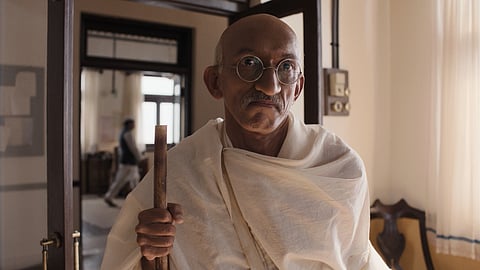
After an uneven first season, the cast turns a procedural theme into something that’s dense and entertaining. The performances are topnotch, bar none. Chirag Vohra’s rendition of Mahatma Gandhi — and I don’t say this lightly — is perhaps the finest rendition of the man yet; he somehow plays him as both a legend and a melancholic old patriarch who resorts to self-harm and emotional blackmail to preserve his old-school ideals. He wants harmony at any cost, and he weaponises his image to discipline an increasingly impatient people. He’s almost too enlightened — a God among humans — to understand the insecurities of the masses. As Nehru, Sidhant Gupta’s wonky accent makes way for a cocktail of courage and anticipatory grief; he rarely sees eye to eye with Patel, Gandhi or Jinnah, yet there’s an equanimity about him that grounds the series and convinces us that these are unsure explorers grappling with the blueprints of distance and separation. More than once we see him inquiring about Gandhi’s whereabouts like a worried child, regardless of where they stand. The one time he smiles, it feels earned: it is resigned and triumphant at once.
One of the better scenes features Nehru being confronted by a group of angry Hindu priests who insist that the date of India’s independence — 15th August — is unholy; he surprises them with his compassion, agreeing to a middle path (midnight) that appeases the men of spirituality without compromising his core as a man of science. Rajendra Chawla virtually disappears into Sardar Vallabhai Patel, the Gujarati home minister who’s the more relatable and reactionary head of the lot; most shows would’ve played him as the toxic or antagonistic figure within the team, but Chawla reveals layers of a man — friend, mentor, follower, Hindu nationalist, Indian empath — with his body language alone. Arif Zakaria is more at home with the oratorship of Jinnah this season, whom he portrays as a performative hater suppressing his morality: not to be confused with the evil-Pakistani stereotypes we otherwise see on screens. I also enjoyed Luke McGibney as Lord Mountbatten; he resists the pitfalls of a white-actor-in-India caricature to reveal a flesh-and-blood statesman who exists beyond the controversies and headlines.
All along, it’s the little details that personalise the sweeping reach of the series. For instance, the montage of the division of princely states between India and Pakistan is symbolised with apples in two baskets — a basic choice at first, until the shot of one bad (Kashmiri) apple is synchronised with a scene of Major General Akbar Khan provoking Pakistan’s Prime Minister into war. There’s a neat Abhishek Banerjee cameo during the Calcutta riots; he appears as a vengeful mob leader, but ends up begging a frail Gandhi to “eat your roti” and break his strike after agreeing to stop the attacks. There’s a track of the radicalisation of former refugee Madanlal Pahwa, one of the co-conspirators convicted for Gandhi’s murder. There's the decision to not show or romanticise Godse, the man who pulled the trigger. There’s the track of two best friends, a Sikh and a Muslim soldier, who choose rival armies after the partition (and a mention of controversial Dilip Kumar hit, Jugnu, on the radio during their exchanges). There’s the passing scene of Jinnah having to leave his Bombay mansion for Karachi after the borders are drawn; he pretends to be smug about the change, but looks behind forlornly at the place he called home while driving away. There's Vallabhai Patel’s reaction to his mentor’s body; he's in such deep shock that he checks a dead man's pulse.
And there’s the most poignant detail of them all: a young Indira Gandhi and her little son Rajiv are indulged by Mahatma Gandhi during his final meeting with Nehru. It’s hard not to detect the heaven-coded moment between Gandhi and the mother-son duo, all of whom would go on to be victims — and democracy-altering captions — of high-profile assassinations. Of course it’s Indira who first receives the news of Gandhi’s death in the Nehru household, one of the show’s many celestial touches in a narrative that conceals a dark sky behind its stars. India’s tryst with destiny remains incomplete, because its tryst with faith is endless; all midnight brings is freedom from the previous day. This perceptively-made series might be over, but its essence is far from finished. After all, history is just life in the rearview mirror; the objects — and subjects — in them are closer than they appear.