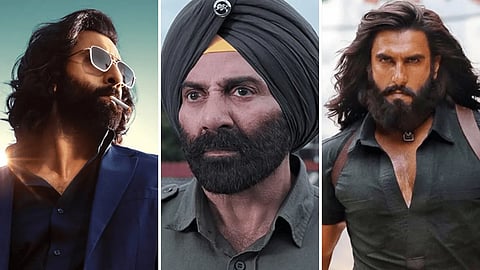


In the post-pandemic scramble to pull audiences back into cinemas, Hindi filmmakers appear to have rediscovered an old tool: time. Not metaphorically, but literally. Over the past three years, a noticeable cluster of high-profile releases has pushed well beyond the 150-minute comfort zone that defined much of the multiplex era, with some breaching the three-hour mark altogether.
The shift is not uniform across the industry. Mid-budget urban dramas still largely hover around two hours. But at the top end, the star-driven spectacles designed to justify a theatre trip, runtimes are inflating. The question now facing exhibitors, producers and editors alike is whether the three-hour film is becoming Hindi cinema’s most visible differentiator from streaming content, and whether the industry risks mistaking duration for depth.
For film editor Nitin Baid, the premise itself may be slightly misguided. The creative process, he suggests, rarely begins with a stopwatch. “I don’t think the intention is inherently to plan a three-hour film,” Baid says. “Most of the films you’re talking about, and this isn’t just in the north or south, you see it in Hollywood too, the duration has changed considerably because many of these stories are catering to a large number of characters.”
His framing aligns with what multiplex data has been indicating since 2023. Longer runtimes tend to cluster around ensemble-heavy, scale-driven projects rather than intimate dramas. In that sense, length is often a symptom of ambition rather than its cause.
More crucially, Baid locates the shift within a broader behavioural change. “Creatively, the effort is to ask: how do we create an experience that people want to show up for?” he says. “Even if it takes you hours to travel and watch a film… you still go because you want to be part of that experience.” The analogy he reaches for is telling. “It’s similar to going to a concert. Look at the Taylor Swift: The Eras Tour film, one of the highest-grossing films last year. What are you going in for? The experience.”
In other words, theatrical cinema is increasingly positioning itself not against other films but against the full spectrum of digital distraction. As Baid puts it, theatres today are competing not just with OTT but “with Instagram and with everything else people are constantly consuming.”
This logic partly explains why recent Hindi tentpoles have leaned into sprawl. When audiences are already accustomed to binge-watching eight-hour series at home, the old anxiety around crossing the three-hour mark has weakened. Engagement, not brevity, is the new currency.
Inside the trade, however, there is growing unease that the industry may be learning the wrong lesson from a handful of long-form successes. Film distributor and exhibitor Akkshay Rathie is unusually blunt about the pattern. “One reason this is happening is our industry has, to some extent, been affected by what I call a herd mentality,” he says.
He traces the shift to a specific moment roughly three years ago, when multiple long films delivered strong theatrical runs. “When the conversation began that three-hour-plus films were working and audiences were savouring them, people took note,” Rathie explains. “After that, a lot of larger-than-life actioners started getting made, some by coincidence, but many by design, because of this notion that three-hour-plus films are what work.”
The distinction he draws is crucial. Some filmmakers, he says, have simply stopped rushing their narratives, a healthy correction after years of rigid runtime orthodoxy. But others appear to be reverse-engineering length itself. “So a few have done it for the right reasons, and many have done it for the wrong ones,” he says.
That tension is already visible in the current pipeline. Films like O'Romeo (two hours 55 minutes) and Tere Ishk Mein (two hours 47 minutes) are arriving pre-positioned as large-scale theatrical plays. Whether they justify that sprawl narratively, rather than merely structurally, is the question exhibitors are asking.
One of the more persistent myths around long films is that runtime itself drives footfalls. Rathie is unequivocal in pushing back. “More than duration, it’s the buzz created by the promotional campaign that decides whether people will watch a film,” he says. “If the promos for Dhurandhar had not been exciting, I don’t think audiences would have turned up in the numbers they did.”
Conversely, he notes, several shorter films have underperformed simply because awareness never reached critical mass. The implication is uncomfortable but clear: runtime is rarely the primary box-office lever. What matters more is whether audiences feel a sense of event-level urgency. The industry’s favourite acronym is FOMO. Length can amplify that perception, but it cannot manufacture it.
Rathie’s most intriguing observation situates the three-hour film within a wider media pattern. “If you look at consumption patterns today, not just in theatres but across the internet, the 26- to 30-minute format is actually declining,” he says.
“What you’re seeing succeed are either very short formats like Instagram Reels and YouTube Shorts, or very long formats like three-hour podcasts.” The middle, in other words, is hollowing out. He even points to cricket’s evolving formats as a cultural analogue: the dominance of T20 at one end and renewed interest in five-day Tests at the other. Content consumption, he argues, is increasingly bipolar, and cinema is responding accordingly.
If that diagnosis holds, the three-hour theatrical film may be less a creative indulgence than a market adaptation, a bid to occupy the long-form event extreme of the attention economy.
Producers, however, still have to live inside spreadsheets. Film business analyst and producer Girish Johar stresses that runtime decisions remain tightly linked to monetisation maths. “Whether a film is two hours or three hours, monetisation, the rotation of shows and screens, ultimately depends on the film’s run,” he says.
A longer film does reduce the number of daily shows a multiplex can program. But Johar suggests the trade-off is acceptable if the content delivers. “If the runtime is proposed by the director, it immediately becomes a primary concern for the producer as well because his financial stake is involved,” he notes. “The makers collectively decide what the film demands and stand by it. The final test, of course, is the audience.”
This is where the theatrical-versus-OTT debate becomes central. According to Johar, the pandemic blurred the lines between what belongs on the big screen and what can comfortably premiere at home. The industry is still recalibrating.
“There is still some confusion about what belongs in theatres and what can go to OTT,” he says. But the direction of travel is clear: theatrical films are being consciously engineered to feel immersive and experiential.
History, both Indian and global, suggests that runtime itself has never been the deciding factor. What matters is whether the film’s internal architecture justifies its duration.
Epic storytelling has always sustained longer cuts. From Ben-Hur to Sholay, and from The Lord of the Rings: The Return of the King to Avengers: Endgame, audiences have repeatedly shown patience, even enthusiasm, when scale, character density and emotional payoffs align.
But the inverse is equally true. When narrative material is thin, extended runtimes can actively damage theatrical prospects by reducing repeat value and amplifying audience fatigue. Rathie puts it bluntly: “Ultimately, you can give audiences a fantastic entertainer in two hours. And God forbid, after spending good money on a ticket, cola and parking, if someone has to sit through three and a half hours of boring cinema, that’s even more punishing.”
What emerges from conversations across the trade is a more nuanced picture than the current runtime discourse suggests.
Yes, theatrical cinema is searching for a clear edge over at-home viewing. Yes, longer runtimes can support world-building and event positioning. And yes, audience tolerance for extended films has demonstrably increased in the post-pandemic era.
But none of the stakeholders interviewed believe duration itself is the magic variable.
As Baid puts it, the industry’s core question remains unchanged: how to create something compelling enough to pull viewers out of their homes. Length is merely one of the tools available, and often the most misunderstood.
Johar offers the longer historical view. When satellite television first arrived, he recalls, many predicted the death of theatrical exhibition. The panic eventually subsided. Cinemas stabilised. OTT, he suggests, may follow a similar curve. “The same applies to OTT,” he says. Audiences today are simply more selective. “Which means if you want to bring them back to theatres, you need a clear differentiator, whether that is storytelling, scale, immersion, larger-than-life characters, or simply the big-screen experience. That edge has to exist.”
Whether the three-hour film becomes that edge, or merely the industry’s latest reflex, will likely depend on what comes next. For now, Hindi cinema appears to be in a familiar phase, rediscovering that time, in movies as in markets, is only as valuable as what fills it.