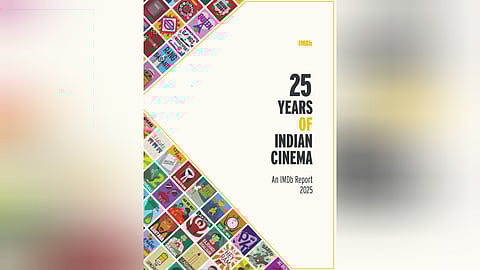


As we inch toward the end of 2025, the 21st century’s first quarter, tidal waves of change are making themselves felt across the Indian film industry, as presented by the IMDb 25 Years of Indian Cinema report. The gears are slowly shifting and the industry is morphing into a new form that’s more collaborative and global, impacted largely by audiences that are more discerning and analytical.
The IMDb report uses data that is global and user-led, collected as it is through audience engagement with the respective film and actor pages on their website. For this reason, the data isn’t limited by geography. It also offers a long-term view of the industry, since IMDb activity by users isn’t restricted just to release windows, nor is it affected by the platform one views the content on since IMDb is always present and listening. As a result, it offers a view of the afterlife of the films, beyond first weekend numbers and release dates.
This longitudinal view offers insights into trends and shifts that have taken place over the past 25 years. The first section details the top five most popular Indian movies each year, between 1 January 2000 to 31 August 2025. This data is based on all-time global page views of the movies on IMDb by its over 250 million monthly visitors. The section lists a total of 130 movies which make up the primary “dataset” of the report.
Overall, these 130 movies account for 9.1 million user ratings, which averages about 70,000 ratings per movie. What’s especially important here is that, since this data is global and timeless, it offers rich insight across the films’ languages, formats and release models.
Alongside the film name, the report also mentions the primary language in which each film was originally shot. The report maps the emerging identity of Indian cinema, one powered by an ensemble of regional industries, and examines the evolving shape of superstardom. It also analyzes global pageviews from IMDb to highlight which Indian films are resonating internationally and the factors driving their success
1. Directors are serving as the key architects of a new era of cinema:
“Unlike star casting,” says the report, “which can be surface-level, directors are serving as the key architects of this new era of cinema — bringing a coherent creative vision and storytelling sensibilities that carry across industries, ensuring scale, tone, and ambition are aligned.”
2. Leading women are self-authoring their stardom:
Deepika Padukone is today’s reigning female actor, with 10 movies in the dataset, ranking behind Shah Rukh Khan (20), Aamir Khan (11), and Hrithik Roshan (11). Despite this, women-led movies are few and far between and their roles remain inconsistently written.
Given this, women are building diversified careers spanning global franchisees, entrepreneurial ventures and international projects. As the report points out: “Female actors are setting new benchmarks for how stardom is built and monetised, self-authoring their rise and proving that career longevity can be forged on their own terms.”
3. Cultural impact is now captured in the long-term value of a movie: Through word-of-mouth, algorithmic suggestions and general cultural dialogue, a film might rake up views at any time. Before streaming platforms, this sort of thoughtful, immersive, long-term assessment simply wasn’t possible. The IMDb report, by looking at global lifetime visitor activity, offers insight into this afterlife too.
For instance, the report highlights how films like Sanam Teri Kasam and Tumbbad were initially overlooked but over time, a loyal following built up, strong enough that the films were re-released. Gangs of Wasseypur was cited as the movie with the highest sustained relevance.
To read more insights, download the full report on www.imdb.com/india/25-years-of-indian-cinema-report