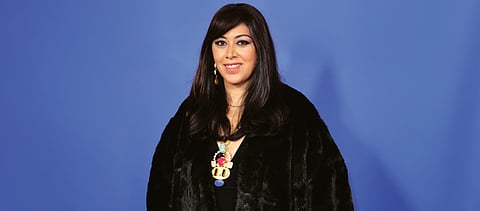


Are death row prisoners beyond redemption? Can a Ferguson activist successfully pass a bill in Missouri's overwhelmingly white and Republican House of Representatives? Indian-American filmmaker Smriti Mundhra doesn’t simply tell stories — she provokes, questions and demands that audiences confront deeply uncomfortable truths about society.
In an industry where recognition often feels like an elusive dream, Mundhra has cemented her place with two Oscar nominations to her name. From the justice-driven St. Louis Superman (2019) to the poignant I Am Ready, Warden (2024) about the death penalty, her documentaries explore the complexities of justice and redemption. But that’s not all; the versatile director was also behind nostalgic Bollywood documentary The Romantics (2023), and the hit reality series Indian Matchmaking (2020), featuring the Internet’s favourite matchmaker Sima aunty.
Oscars: Full List of Nominees
Now with an upcoming fictional feature film in the works, Mundhra reveals the trick to getting a second Oscar nomination and earning the trust of a death row prisoner along with his victim’s son, in a candid tell-all with The Hollywood Reporter India.
Congratulations on your recent Oscar nomination for I Am Ready, Warden. What’s the trick to getting nominated again?
I was surprised, to be honest. It's the kind of thing that you never expect to happen even once in a lifetime. I just focus on doing the best work that I can and the recognition flows from that. When you've been nominated once, people look at your work in a different way. It's definitely by no means any guarantee, but people with influence evaluate your work through a different lens. It's about trying to make sure as many people as possible hear about the film, find those who the film resonates with, and then enlist their help in getting the word out. There's definitely easier access the second time around.
What was it like being nominated the first time?
That was crazy. It felt so far-fetched to me to be nominated for an Oscar; I never even had it [an Oscar nomination] on my vision board because it felt that out of reach. It was one of the greatest moments of my life.
How do you pick your subjects? What drew you to death row prisoner John Henry Ramirez’s story in particular?
I read a lot of articles, [and keep up with the] local news; things that are off the beaten path. I try to find writers and journalists who find interesting stories and reveal parts of the world that I wouldn't normally have access to. Sometimes I find a topic that really draws me in, and if I come across a character who can illuminate it, then that activates my instincts to pursue it. It could be the other way around too, where the character comes first, as an entry point into a subject matter that feels relevant. It starts with curiosity, reading a lot, trying to engage with the world as much as possible, and finding people whose stories tell us something about ourselves as a society.
What was the most challenging aspect of gaining access to Texas’ prison system and earning the trust of John Henry Ramirez and his victim, Pablo Castro’s family?
Navigating the very intricate rules, regulations and protocols of the prison system was really challenging. And thankfully, I collaborated on this project with [journalist] Keri Blakinger, who had been covering Texas prisons for a while. Keri had [developed] a friendship with John Henry for over a year by the time we started this project. He inherently trusted her, which really helped him open up. With Aaron Castro, the son of John's victim, it was a much longer process. I had reached out to all of the victim's family when I started this film and Aaron responded. For many, many months, he didn't want to participate. He didn’t want to be in the film but wanted me to know his perspective. He said, ‘if you're going to make a film about my father's killer you should understand the impact of what he did.’ Through that process, we started talking regularly and he seemed to be somebody who really needed to talk. We would talk a couple times a week, for hours at a time. He started to trust me and understood that I wasn't going to tell the story in a way that was disrespectful to his father, or to him. The week of John's execution is when Aaron finally allowed us to start filming his side.
Are there any misconceptions about people on the death row?
One of the biggest misconceptions is that people on death row are hardened, unfeeling killers. That may be the case some of them. But many of them committed crimes when they were young and have spent years, if not decades in solitary confinement... thinking about the consequences of their actions. John was just a completely different person at age 38 when I met him, than he was at 19 when he committed the crime. It was a robbery that escalated and resulted in him killing Pablo Castro. But at 38, he was more mature and deeply remorseful. Sometimes they're just people who've made terrible mistakes. [John] took a life so there's no getting around that, but he was not not somebody to be afraid of, when I met him. He wasn't a danger to anybody anymore.
Were there any moments during filming that fundamentally changed the way you viewed capital punishment?
I was against the death penalty when I started making the film and still am, but spending time with Aaron gave me a lot more empathy for people who have been affected by violent crime — and their need for closure and justice. I started understanding the burden that they have to carry and live with. In Aaron's case, [the crime] came to define his life. Every time John had a legal development, a stay of execution or he was in the news, the trauma was ripped open for Aaron. He thought the only way he could get closure would be with John's execution but as you see in the film, that doesn't exactly turn out to be the case.
What does the title refer to?
Those are John's last words, the last statement before he was executed. It speaks to his resignation; I think he was ready to die at the time it happened. They are also very common last words of prisoners in the death chamber; an iconic phrase synonymous with the death penalty in [The United States of] America, because a lot of prisoners put those with their last words. They say, ‘I'm ready, warden.’
You’ve covered everything from Bollywood nostalgia in The Romantics to American justice in St. Louis Superman to now, the death penalty in I Am Ready, Warden. What unites your work as a storyteller?
Somebody pointed this out to me recently. Ironically, the one binding factor of all of my work — whether it's dating shows or The Romantics — is that they're all about parent-child relationships. Maybe there's something there that I'm trying to deal with in my own life! (Laughs) But generally speaking, I like stories that represent complications in people, not the purely uplifting narratives. I pick stories that show us dimensionality and complexity of human beings because that's where we learn the most about ourselves. There has to be a compelling character with a dramatic question at the centre of it.
How different was your experience making Indian Matchmaking compared to your subsequent shows, Jewish Matchmaking (2023) and Muslim Matchmaker (2025)?
I usually think about things that make them similar, like the universal quest for love. But in the new show, Muslim Matchmaker, the biggest difference is that the matchmakers are younger in their early 30s, belonging to the same generation as their clients. They relate to their clients in a completely different way than say, Sima [Taparia] aunty did [in Indian Matchmaking]. You see it manifested in the advice they give and the way that they guide their clients. They're not talking about adjustment and compromise. And there's two matchmakers, so that's another difference. They relate to the perils of modern day in a way that Sima and Aleeza [Ben Shalom] [in Jewish Matchmaking] are a bit distant from.
Is it a conscious decision to bring forth predominantly South Asian narratives through your work?
I do gravitate to it because that's my lived experience. I'm an Indian woman raised between the U.S. and India. I grew up with Bollywood and still live in a multi-generational household. That's what I know and relate to and it comes out in my storytelling. But also, I've been working in the business since I was 16 years old. I have been waiting my whole career, nearly 30 years, for a moment where the stories about my cultural background could be mainstream. It's exciting to find the right time to tell a lifetime of experiences, ideas and stories so I'm trying to take as much advantage of it as I can.
What's next on your plate?
I've been working non-stop for four years, no days off. So after the Oscars, I'm gonna take a little break and reacquaint myself with my husband and children and then I'm going to spend some time writing and preparing for my first fictional feature film.